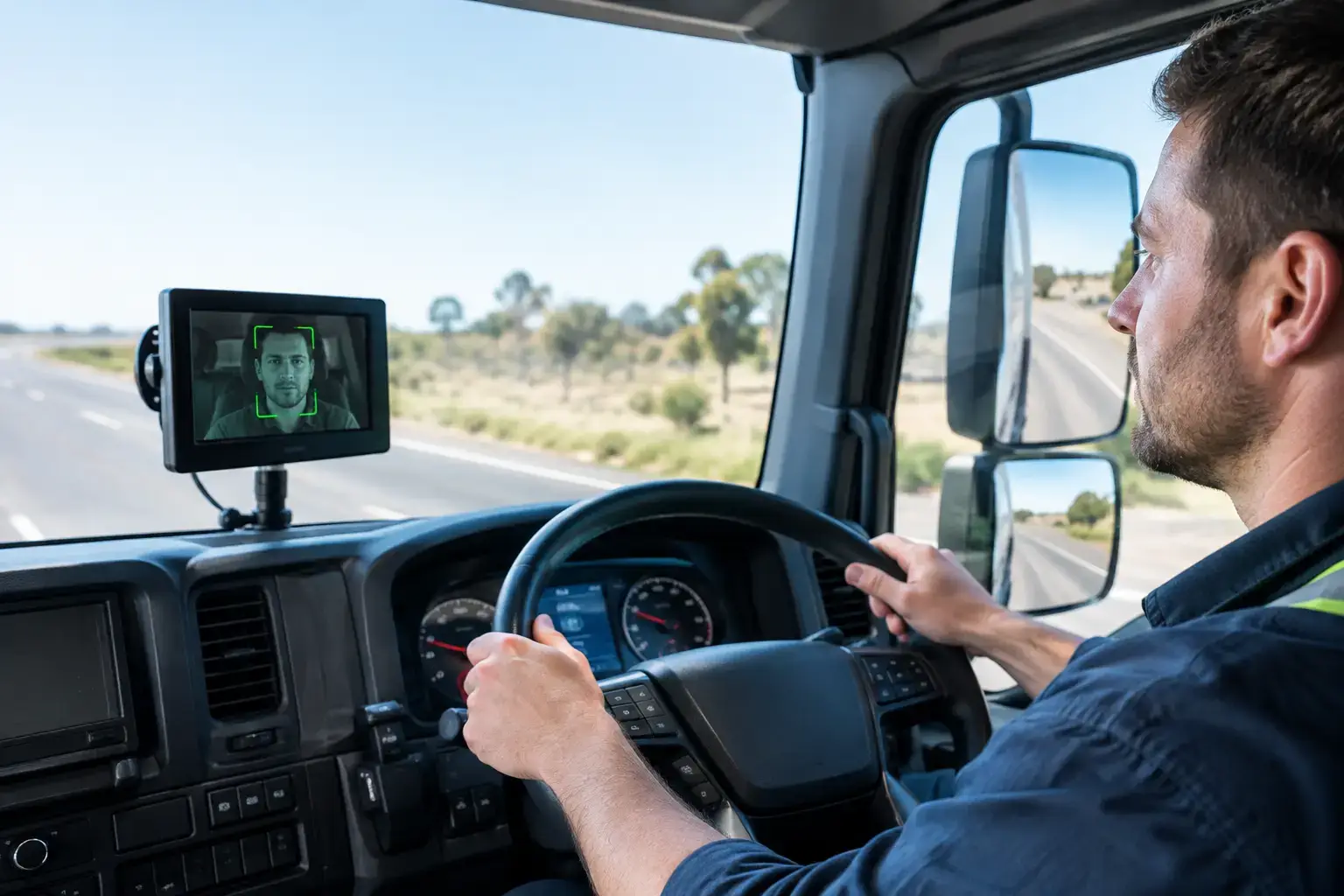

A fatigue alert at 3:40 pm on a local waste route does not necessarily mean the driver has fallen asleep. It means the system has detected a pattern that may indicate reduced alertness and requires attention. Understanding what causes driver fatigue alerts helps fleet managers respond proportionately, protect drivers and build records that stand up to operational and compliance scrutiny.
For heavy vehicles, plant, waste fleets, construction vehicles and long-distance transport, fatigue is rarely a single-event problem. It develops through a combination of work schedules, sleep quality, task demands, heat, health factors and driving conditions. Modern in-cab camera technology can identify visible signs before they become a serious safety event, but the alert is a prompt to assess risk - not a diagnosis or a disciplinary finding on its own.
What causes driver fatigue alerts?
Most driver fatigue alerts are generated when an AI driver monitoring system detects facial, eye or head-movement patterns associated with drowsiness or distraction. Depending on the camera and configuration, the system may identify prolonged eye closure, frequent blinking, repeated yawning, head nodding, looking away from the road for too long, or a head position consistent with reduced alertness.
The alert threshold matters. A brief glance at mirrors, a mounted work device or an intersection is normal driving behaviour. A capable system is designed to distinguish that from sustained inattention. It assesses duration, frequency and repeated behaviour rather than simply flagging every movement.
Some platforms also use vehicle data to add context. Lane departures, harsh braking, irregular steering behaviour, speed variation and long periods of continuous driving can indicate increased risk when considered alongside an in-cab event. However, vehicle behaviour alone cannot confirm fatigue. Poor road surfaces, crosswinds, changing traffic conditions and evasive manoeuvres can all affect how a vehicle moves.
Common in-cab triggers
Eye-related events are among the most common triggers. These include eyes closed for longer than an accepted threshold, slow eyelid closure or a series of prolonged blinks. Repeated yawning may also be detected, particularly where it occurs with eye closure or head movement.
Head pose is another key signal. A driver whose head drops forward, tilts repeatedly or turns away from the driving task for an extended period may trigger an alert. In some systems, mobile-use detection and distraction events are reported separately, but they can still be relevant when reviewing an apparent fatigue pattern.
The practical point for fleet teams is that one alert should be reviewed in context. Several alerts in a short period, especially late in a shift or after a long driving window, demand a more immediate response than a single low-confidence event.
Conditions that can increase fatigue risk
Driver monitoring technology sees outward signs. The underlying cause may be operational, personal or environmental. Common contributors include insufficient sleep, early starts, night work, rotating rosters, extended driving periods, physically demanding loading work and inadequate recovery between shifts.
Heat, dehydration and monotonous road conditions can reduce alertness, particularly on regional runs or repetitive haulage work. Certain medications, illness, sleep disorders and alcohol consumed outside work can also affect a driver's capacity. These factors require a respectful, confidential management approach rather than assumptions.
For heavy vehicle operations, scheduling pressure is a significant risk factor. Delayed loading, traffic, site queues and last-minute route changes can compress available rest time or encourage drivers to push through when they should stop. A fatigue-management process that exists only on paper will not resolve those operational pressures.
Why an alert is not always a fatigue event
Camera systems are highly useful, but no detection technology is perfect in every condition. Sunglasses, low light, direct sun glare, cab vibration, camera position, facial coverings and temporary obstructions can affect image quality. A driver may yawn because of a conversation or a change in temperature, rather than tiredness.
That does not make the alert irrelevant. It means fleet managers should separate detection from determination. Review the video event where available, check its severity and duration, then consider the driver's shift, recent work pattern, road environment and any related vehicle data.
False or low-context alerts should also be used to improve the system. Camera placement may need adjustment, alert sensitivity may be unsuitable for the task, or drivers may need clearer guidance on what the system detects and why. The goal is credible safety intervention, not a flood of notifications that supervisors learn to ignore.
How fleet managers should respond to a fatigue alert
The right response depends on the level of risk and whether the vehicle is moving. A high-severity alert or repeated events should be escalated promptly through the agreed safety process. Where practical, contact the driver using approved procedures and direct them to stop at a safe location for an assessment and break. Do not encourage a driver to use a mobile while operating the vehicle.
Once the immediate risk is controlled, the supervisor should review the event alongside the broader shift record. Was the driver approaching a planned break? Has the vehicle been operating for an unusual number of hours? Were there multiple distraction, seatbelt or harsh-driving events? Is there a pattern across several shifts, vehicles or depots?
A fair review protects both the business and the driver. Ask what occurred, listen to the driver's account and record the action taken. In many cases, the appropriate outcome may be a rest break, roster adjustment, welfare check or training conversation. If the review identifies a potentially serious fitness-for-work issue, follow established HR, safety and privacy procedures.
For fleets operating under the Heavy Vehicle National Law, this evidence can support fatigue risk management and Chain of Responsibility processes. It does not replace legal work and rest requirements, approved fatigue-management accreditation, electronic work diary obligations or management supervision. It provides another timely source of operational evidence.
Build fatigue alerts into a workable process
The strongest results come from a defined workflow, not from installing cameras and hoping the alerts change behaviour. Drivers need to know what is monitored, what an alert means, who can review footage and how the business will use the information. Clear communication is essential for trust, particularly where camera technology is introduced into an established workforce.
Supervisors also need consistent escalation rules. A low-severity event may be reviewed at the end of shift, while repeated high-severity events require live intervention. The rules should account for the operating environment. A concrete agitator working short urban cycles has different fatigue exposures from a linehaul prime mover on an overnight regional route.
Use reporting to identify system-level causes, not just individual events. If fatigue alerts cluster around a particular start time, customer site, route or roster, the operation has information it can act on. Adjusting dispatch windows, break planning, job sequencing or relief-driver coverage may reduce risk more effectively than repeated driver reminders.
Measures worth tracking
Over time, fleet teams should compare alert frequency against hours worked, time of day, route type, depot, vehicle and incident data. Review whether alerts are concentrated among newly inducted drivers, specific shifts or particular camera installations. This helps distinguish a behavioural issue from a scheduling, training or equipment issue.
It is also worth tracking response quality. How quickly were serious events reviewed? Was contact made safely? Was a break taken? Did similar alerts recur? These measures show whether the fleet is managing risk, rather than merely collecting footage.
Choosing technology that supports the operation
A fatigue-alert solution should fit into the wider fleet environment. Standalone notifications delivered to an inbox create extra work and often lack the location, vehicle and driver context needed for a timely decision. Integrated telematics can show where the vehicle was, the direction of travel, the shift duration, related driving events and the response history in one operational view.
For Australian fleets, local deployment and support matter as much as detection capability. Camera hardware must cope with vibration, dust, heat and varied cabin layouts. The platform should also support practical permissions, audit trails and retention settings so safety, operations and compliance teams can access the right information without creating unnecessary privacy exposure.
Netcorp's integrated fleet platform is designed to bring AI camera events, telematics and compliance workflows into a single operational environment, giving teams clearer evidence for day-to-day decisions.
A well-managed fatigue alert is not about catching a driver out. It is an opportunity to intervene early, understand the pressure behind the event and send every person home safely at the end of the shift.