
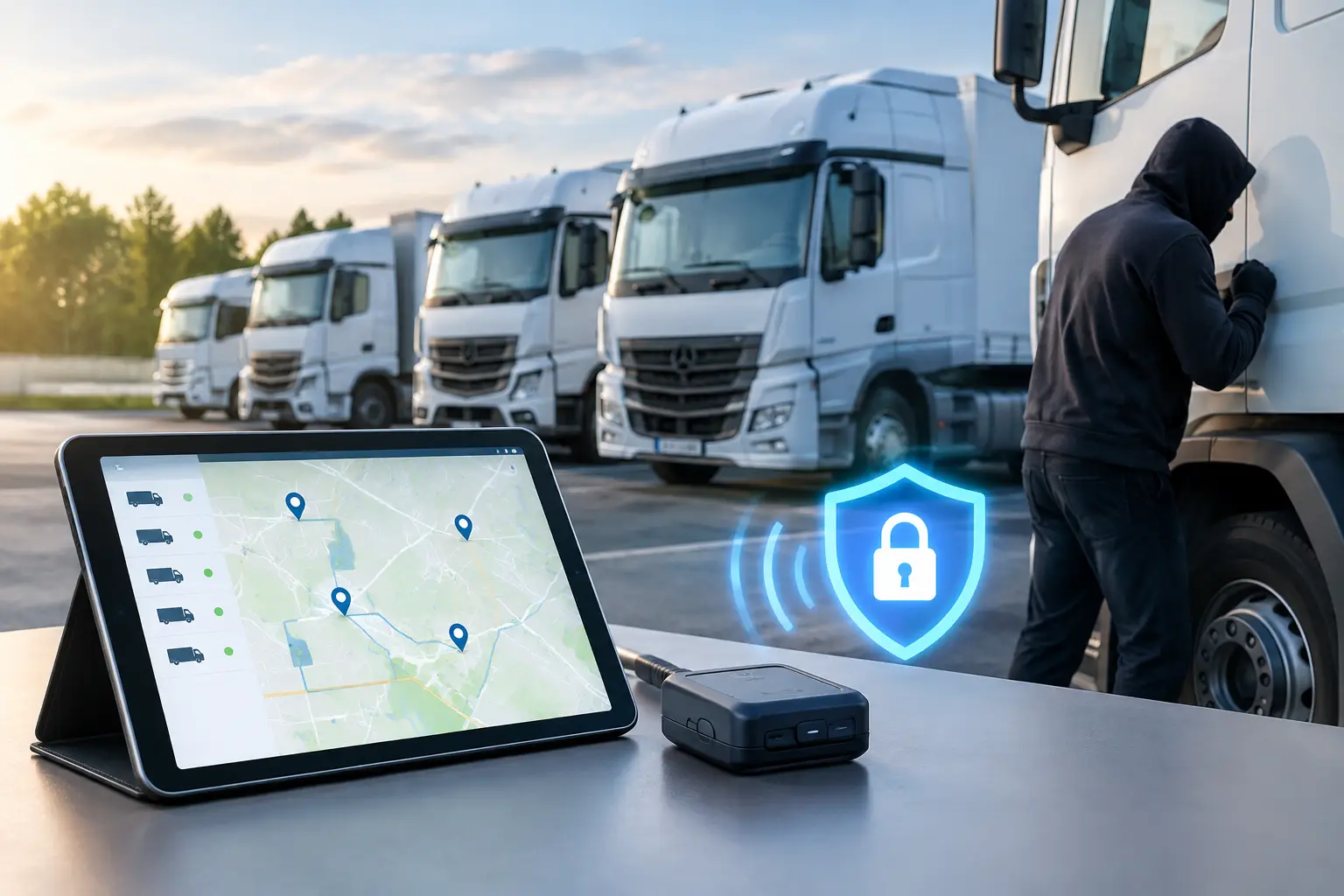
A stolen tipper, excavator or trailer can disrupt far more than the day’s schedule. Jobs are delayed, operators are reassigned, customers need updates and insurance, hire costs and replacement lead times quickly add up. So, can GPS trackers prevent theft? Not on their own. What they can do is make an asset harder to steal unnoticed, significantly easier to locate and more likely to be recovered before the operational damage escalates.
For Australian fleet operators, theft prevention is most effective when tracking is part of a defined security process. The technology provides visibility. The business still needs the right installation, alert settings, response procedures and people prepared to act when an alert arrives.
How GPS trackers help prevent theft
A visible GPS tracking program can be a deterrent. Opportunistic thieves generally favour assets that can be moved, hidden and sold with minimal risk. Signage, asset identification and a known telematics system introduce uncertainty: the vehicle, trailer or machine may be reporting its location, ignition state or movement in real time.
The greater value, however, is early detection. A tracker can notify nominated staff when a vehicle moves outside approved hours, leaves a depot, travels beyond a geofenced worksite or is used without authorisation. Rather than discovering a missing asset at the next shift change, the operator can investigate while the asset may still be nearby.
This distinction matters. GPS tracking is not a physical immobiliser, security gate or substitute for secure keys. It reduces the time between unauthorised activity and a practical response. In theft events, minutes and hours can make a material difference to the prospect of recovery.
Recovery visibility changes the response
Once theft is confirmed, a live or recently updated location gives managers a clearer basis for action. They can preserve the route history, provide relevant details to police and insurers, and coordinate internally without sending staff to search blindly.
No employee should be asked to confront a suspected offender or recover an asset themselves. The appropriate response is to involve police and follow the organisation’s safety procedures. Tracking information supports that process by establishing where the asset has travelled, where it was last seen and whether it has entered a known location or crossed an operational boundary.
For high-value plant, heavy vehicles and specialist trailers, location history can also support incident records, insurance claims and follow-up controls. The same platform used for daily fleet visibility can provide an auditable record when an exception occurs.
Can GPS trackers prevent theft of every type of asset?
The short answer is no. A GPS tracker cannot guarantee prevention, and the outcome depends on the asset, installation quality, communications coverage and response process. It is also possible for a device to be found, damaged or shielded from communication.
That does not reduce the value of tracking. It means fleet managers should select and deploy the technology according to the risk. A ute parked at an employee’s home has different exposure to an excavator left on a remote site, a concrete agitator working long shifts, or a trailer that changes hands across multiple depots.
Assets that sit unattended for extended periods often benefit from low-power tracking with movement alerts and tamper awareness. Powered vehicles can support richer telematics, including ignition status, driver identification, route history and alerts based on operating hours. Trailers, bins, attachments and mobile plant may need purpose-built battery-powered hardware designed for their environment and expected reporting interval.
A device that reports frequently may provide better recovery visibility, but it can require more power. A long-life battery unit may be suitable for equipment that moves rarely, but it may not provide second-by-second updates. These are operational decisions, not simply product specifications.
The controls that make fleet tracking more effective
GPS tracking delivers the strongest theft protection when it works alongside sensible physical and administrative controls. In practice, fleet operators should consider four areas together:
- Secure access: controlled keys, key registers, depot access management and immobilisation measures appropriate to the vehicle or plant.
- Discreet, professional installation: a tracker placed where it is difficult to identify or remove, with wiring and mounting suited to the operating environment.
- Meaningful alerts: geofences, after-hours movement alerts, unauthorised ignition alerts and notifications directed to people who can respond.
- A documented response plan: clear escalation contacts, police reporting steps, insurer requirements and rules that prioritise staff safety.
Alert design deserves particular attention. Too many low-value notifications create alert fatigue, and an alert that nobody owns is little better than no alert at all. Start with the theft scenarios that genuinely concern the business: an asset leaving a yard overnight, a trailer moving on a weekend, plant leaving a project boundary, or a vehicle operating after its authorised shift.
Each alert should have an owner and an expected action. For example, an after-hours depot exit may go to an on-call manager who checks the job allocation or driver contact details before escalating. A weekend plant movement alert may need to reach site security and the project supervisor. The response should be proportionate, fast and safe.
Installation and coverage are operational issues
The effectiveness of a GPS tracker is influenced heavily by where and how it is installed. Hardware needs a reliable power source where applicable, secure mounting, suitable antenna performance and protection from vibration, dust, water and deliberate interference. This is particularly relevant in construction, waste, transport and quarry environments.
Satellite positioning also depends on the asset being able to receive and transmit information. Underground locations, enclosed sheds, shipping containers, dense urban areas and remote regions can affect reporting. If an asset loses connectivity, the platform may show its last known location rather than a live position. Fleet teams need to understand this difference before an incident occurs.
A professionally deployed system should also be tested. Confirm that the asset appears correctly on the map, movement is recorded, geofences are accurate and designated contacts receive alerts. Review the configuration after depot changes, new work sites, roster changes or asset reassignment.
Use telematics data before theft happens
The most useful security controls are often built from ordinary operational data. Route history can reveal an asset that regularly returns to an unapproved location. Ignition and utilisation data can identify unexpected use outside rostered hours. Driver identification can help separate an authorised collection from an unauthorised movement.
For mixed fleets, this creates a more complete view of exposure. A transport operator may need to monitor prime movers and trailers as separate assets. A civil contractor may need visibility of excavators, generators, attachments and service vehicles across several sites. Waste and government fleets may focus on depot exits, vehicle allocation and after-hours activity.
One platform that combines vehicle tracking, asset tracking and relevant operational workflows reduces the chance that critical information sits in separate systems. It also gives managers a consistent record for daily dispatch, safety review, maintenance planning and security investigations. Netcorp’s Australian-designed fleet platform is built around this type of connected operational visibility, with hardware and support suited to demanding fleet environments.
Privacy, policy and driver communication
Tracking must be implemented with clear policies and appropriate communication. Employees should understand what is tracked, why it is tracked, who can access the information and how data will be used. For fleet businesses, theft prevention is a legitimate operational purpose, but it should sit within a broader policy covering vehicle use, safety, privacy and record retention.
Clear communication also improves the quality of alerts. Drivers and supervisors can explain legitimate after-hours work, approved route changes or emergency movements before they become a false alarm. The goal is not surveillance for its own sake. It is to protect people, equipment and the organisation’s ability to keep working.
GPS tracking will not stop every attempted theft. But when the system is properly installed, monitored and tied to a disciplined response plan, it can turn a missing asset from a next-day discovery into an actionable event. That is the practical advantage: better control when the business can least afford to lose it.