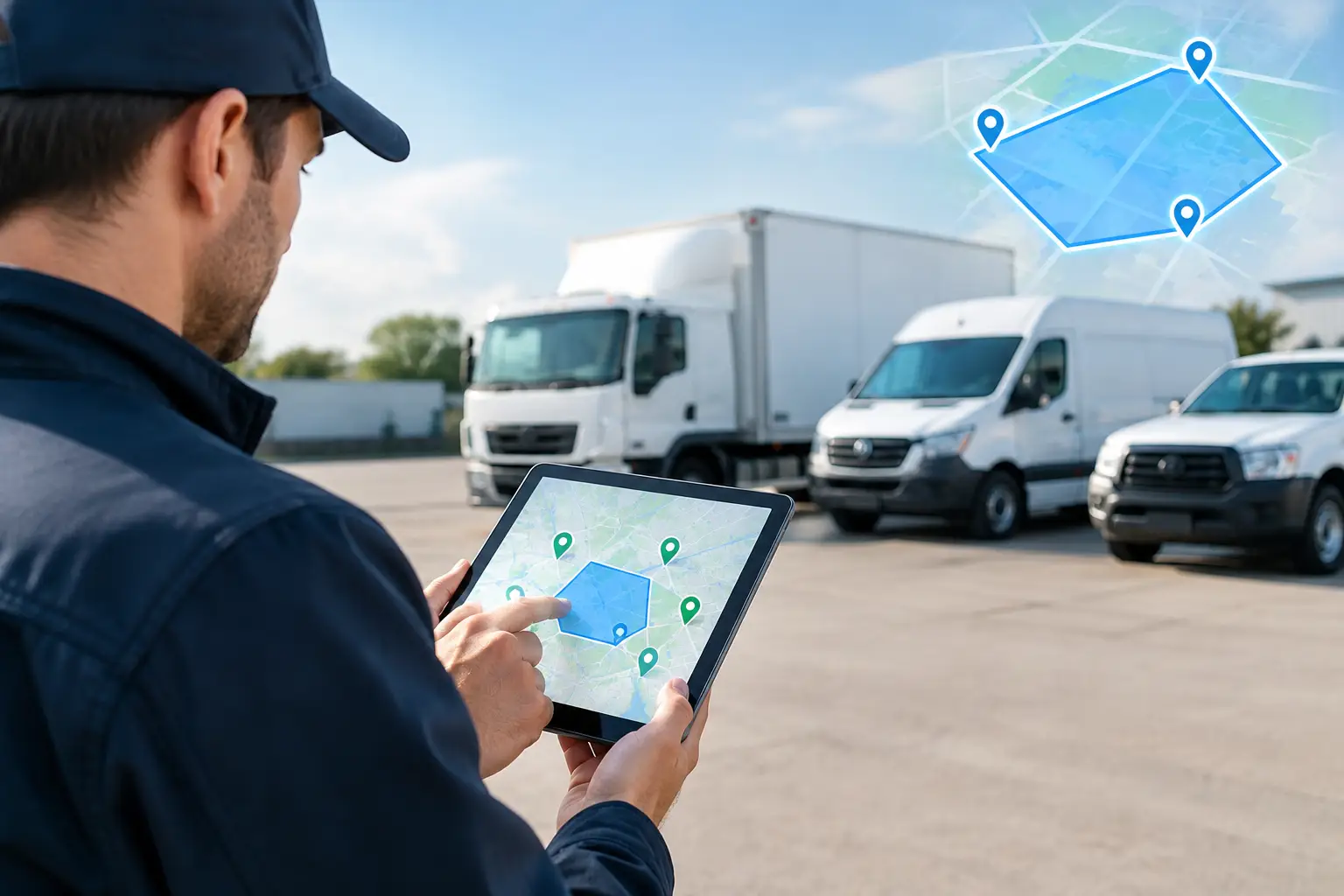
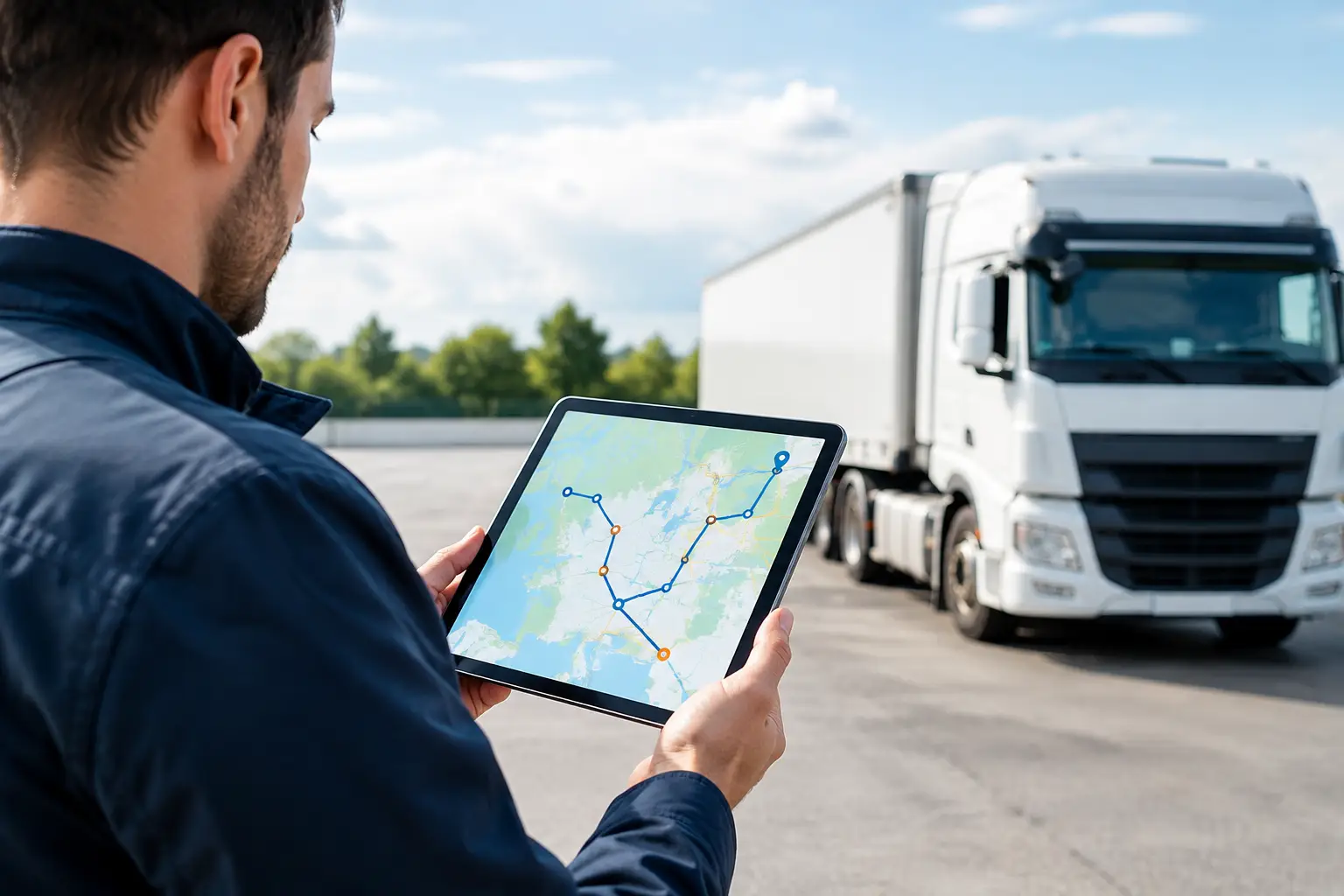
A customer says a truck never attended site. A driver disputes an unauthorised detour. A supervisor needs to verify when a plant item entered a restricted area. These are not questions that can wait for someone to reconstruct a shift from memory. Fleet route history reporting provides a time-stamped record of where an asset travelled, when it stopped and how it moved through the day.
For Australian fleet operators, the value is not simply seeing a line on a map. It is having operational evidence that can be checked quickly, understood by the right person and retained when a dispute, safety review or compliance enquiry arises.
What fleet route history reporting should show
A useful route history report connects location data to the working reality of a vehicle, driver or asset. At a minimum, it should show a clear route over a defined period, including departure and arrival times, travel direction, distance travelled and periods of stationary activity.
The stronger reports go further. They distinguish between an engine running and a vehicle genuinely working, identify time spent at a customer site or depot, and make it practical to examine exceptions such as excessive idling, out-of-hours movement or a deviation from an approved route. For a concrete agitator, this may mean confirming site arrival and dwell time. For a waste fleet, it may mean validating a service run or investigating an unplanned stop. For plant hire, it can provide evidence of asset movement between projects.
Accuracy matters more than visual polish. A report that looks clean but relies on irregular position updates, poor installation or unclear asset allocation will create more questions than it answers. Reliable reporting begins with correctly fitted hardware, consistent data capture and a platform designed to retain usable records at fleet scale.
Why route history matters beyond vehicle visibility
Real-time tracking helps dispatch make the next decision. Route history helps managers make the better decision after the shift, when there is time to identify recurring cost, risk and process issues.
Consider overtime. A route report may show that the last job was completed on time but the vehicle remained parked with the engine running for 45 minutes before returning to base. Across multiple vehicles and weeks, those small gaps can expose weak job allocation, delayed paperwork, depot congestion or avoidable private use. The answer is not always to shorten the route. Sometimes the operational fix is a different start location, a revised run sheet or a better handover process.
Route evidence also reduces the time spent debating basic facts. When a customer challenges a call-out charge, a verified arrival and departure record gives the commercial team a starting point. When a driver raises concerns about unrealistic schedules, the same data can reveal whether the route plan allowed for traffic, loading time and mandatory breaks. Good telematics should support fairer decisions, not simply closer supervision.
Route history reporting for heavy vehicles and compliance
For heavy-vehicle operators, route records can support a broader compliance picture, but they should not be treated as a replacement for regulated records or required systems. Depending on the operation, fleet data may need to sit alongside electronic work diary information, fatigue procedures, onboard mass data, pre-start checks, maintenance records and proof-of-delivery documentation.
The benefit is context. If a fatigue or safety event needs investigation, route history can help establish the sequence of travel, stops and site activity. If a vehicle entered a location with access restrictions, the operator has a practical record to review. If a manager is assessing route suitability, historical travel can identify repeated exposure to constrained roads, congestion, low-clearance areas or unsuitable approaches to site.
This is particularly valuable where the Chain of Responsibility places expectations on multiple parties. Transport managers, schedulers and business owners need visibility of how plans translate into work performed. A report cannot prove every compliance obligation was met, but it can provide a defensible operational record and highlight where a process needs attention.
The difference between a report and an audit trail
A map replay is useful for a quick review. An audit-ready report needs more discipline. It should identify the asset, reporting period and relevant times clearly, while preserving the underlying event data rather than relying on a manually edited screenshot.
Access controls and data retention also matter. In a larger fleet, several people may need different levels of visibility: dispatchers monitoring jobs, managers reviewing performance, safety teams investigating incidents and administrators managing system settings. A platform with clear user permissions and dependable record retention protects both the fleet and its people.
Netcorp’s Australian-designed fleet platform is built for this kind of end-to-end operational visibility, combining vehicle and asset tracking with compliance and safety workflows supported by a local technical team.
Turning route data into useful operational action
The common failure is producing route reports only when something has gone wrong. That makes reporting reactive and turns valuable data into an administrative chore. A better approach is to set a regular review rhythm around the decisions the business actually needs to make.
A transport manager might review route adherence and delayed return-to-base times weekly. A safety leader may assess out-of-hours movement, repeated speeding locations or patterns around high-risk sites. A customer service team may need arrival and departure evidence only for selected contract jobs. The right cadence depends on fleet size, job frequency and risk profile.
Rather than measuring every possible data point, start with a small set of questions. Are vehicles reaching jobs within the planned window? Are drivers using the intended access route? How long are assets stationary with engines running? Which runs repeatedly exceed planned kilometres? Are there movements outside approved operating hours?
These questions turn raw GPS points into operational measures. They also prevent reports from becoming a volume exercise where nobody has time to interpret the output.
Use geofences to give routes business meaning
Geofences define important locations such as depots, customer sites, transfer stations, quarries, construction zones and restricted areas. Once configured properly, they allow reports to show meaningful events: entered site, departed site, stopped at depot or travelled outside an authorised area.
The trade-off is maintenance. A geofence that is too wide can report a site arrival while the vehicle is still queued on a public road. One that is too tight may miss a vehicle using an alternate gate. Locations should be sized to reflect the actual workflow, then reviewed after changes to site access or operating conditions.
For businesses with repeatable work, geofence reports can be more actionable than a full route map. They make it easier to compare service duration, verify attendance and identify delays without manually reviewing every journey.
Data quality determines whether people trust the report
Route history reporting is only as credible as the data behind it. Poor GPS coverage can occur in tunnels, dense built-up areas, underground sites and remote locations. Position updates can also be affected by device configuration, antenna placement, power interruptions or an asset that has been reassigned without being updated in the platform.
These limitations do not make reporting unreliable, but they must be understood. Experienced operators use route data alongside job records, driver information and site context, particularly when reviewing an incident. They also establish a process for correcting asset names, driver assignments and known site locations before a report is needed under pressure.
Installation quality is a major part of the equation. A telematics device must be suited to the vehicle or equipment type and fitted to support dependable power, GPS reception and required inputs. That is why fragmented arrangements - one provider for hardware, another for tracking and a third for support - can create unnecessary delays when data does not look right.
Build reports around decisions, not surveillance
Drivers are more likely to accept telematics when the purpose is clear and consistently applied. Route history can protect drivers from inaccurate customer claims, identify unsafe scheduling assumptions and prove time spent waiting at a site. It can also expose behaviour or process failures that need to be addressed.
The balance is to define what will be monitored, who can access reports and how exceptions are investigated. Not every detour is misconduct. A road closure, site instruction, fuel stop or safe driving decision may explain a variation. Managers should check the circumstances before drawing conclusions from a map line.
The best route history reporting becomes part of normal operational discipline: reliable records, sensible exception rules and timely conversations with the people closest to the work. When a question is raised months later, the fleet should not have to rely on recollection. It should have evidence that is clear enough to support a fair, commercial and compliant decision.