A useful AI fatigue camera review is not about whether a camera can recognise a closed eye or a yawn in a controlled demonstration. For Australian fleet operators, the real test is whether it identifies meaningful fatigue risk early enough to support the driver, gives managers reliable evidence and fits into existing safety and compliance workflows without creating more work.
That distinction matters in heavy transport, construction, waste, concrete and government fleets. A poorly configured in-cab camera can generate nuisance alerts, frustrate drivers and leave supervisors sorting through low-value footage. A well deployed system gives the operation a clearer view of fatigue-related risk, distraction and unsafe driving behaviours, with an auditable record of what occurred.
What an AI fatigue camera should actually do
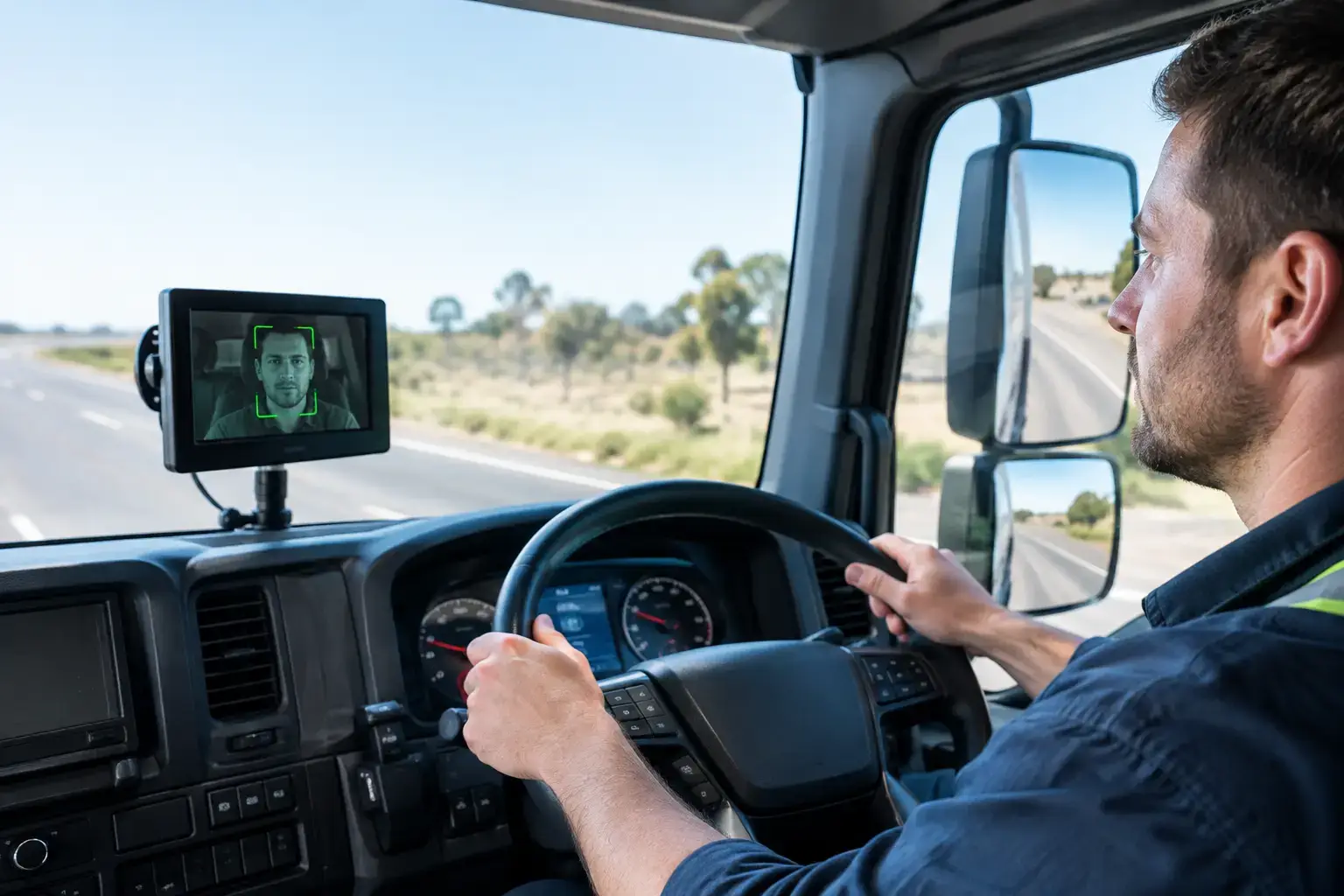
AI fatigue cameras use an inward-facing camera and machine vision to assess visible signs that a driver may be impaired by fatigue or distraction. Depending on the device and configuration, the system may detect prolonged eye closure, repeated head nodding, looking away from the road, mobile phone use, smoking or seatbelt non-compliance. Many solutions also pair driver monitoring with a forward-facing road camera, allowing safety teams to review the driving context around an event.
The word “AI” can obscure a simple operational question: what happens after an event is detected? An effective system should create an immediate in-cab alert where appropriate, record a short event clip and deliver that event into a platform where authorised staff can review it. The event needs a clear timestamp, vehicle identity, location and supporting footage. Without that chain of evidence, a fatigue alert is difficult to investigate fairly or use as part of a broader safety process.
A camera is not a fatigue-management system on its own. It cannot confirm whether a driver is fit for work, replace rest requirements or remove a manager’s duty to respond to reported fatigue. Its value is as an additional control that identifies visible warning signs in real time and produces information that can guide timely intervention.
AI fatigue camera review: the criteria that matter
Fleet buyers should assess camera technology against the conditions in which their drivers actually work. A long-haul prime mover, a stop-start waste vehicle, a concrete agitator and a civil construction ute present different operating environments, driver movements and risk profiles.
Detection accuracy and alert quality
The first consideration is whether the system distinguishes genuine risk from normal driving activity. Drivers naturally scan mirrors, look towards work zones, check controls and turn their head while reversing or manoeuvring. Camera placement, lighting conditions, sunglasses, night driving and cab vibration can all affect detection performance.
No system will be perfect in every circumstance. The practical measure is whether the alert settings can be tuned for the fleet, whether false positives are manageable and whether the supplier can explain the conditions that may affect detection. A high volume of low-value alerts leads to alert fatigue among both drivers and supervisors. Conversely, settings that are too conservative may miss opportunities to intervene before a fatigue event becomes critical.
Look for an implementation process that includes calibration, a defined trial period and a review of early event data. This allows the operation to set sensible thresholds based on vehicle type, route profile and risk exposure rather than accepting default settings without scrutiny.
Evidence in the context of the road
An inward-facing clip alone can show a driver looking down or away, but it may not show why. Combining driver-facing footage with road-facing video, GPS location and vehicle data gives supervisors context. For example, a distraction event near a depot gate is not assessed in the same way as an event at highway speed on a long overnight run.
The platform should make this information straightforward to review. Managers need to see the event, understand the vehicle’s location and speed, and determine whether coaching, a welfare check, retraining or a formal investigation is required. If retrieving footage requires multiple systems or manual requests to a third party, the safety benefit can be delayed when time matters.
For heavy-vehicle operations, the camera system should also sit sensibly alongside fatigue-management records, electronic work diary processes, pre-start checks and telematics data. A single event does not provide the complete compliance picture, but it can identify where closer review is necessary.
Driver acceptance, privacy and fair use
Driver-facing cameras require a clear policy, consultation and consistent management practice. The strongest deployments treat cameras as a safety tool rather than a surveillance shortcut. Drivers should understand what the system detects, when video is recorded, who can access footage, how long it is retained and how alerts will be used.
Privacy settings and access controls are therefore core selection criteria, not administration details. Fleet operators should confirm that video access can be limited to authorised roles, that event footage is retained according to a documented policy and that audit records show who accessed it. These controls support both trust within the workforce and sound information governance.
Fair investigation matters as well. Video should be reviewed with context before assumptions are made about a driver’s conduct. A fatigue or distraction alert may point to a coaching need, an unsuitable schedule, a health and wellbeing concern, poor route conditions or an equipment issue. The objective is risk reduction, not simply collecting breaches.
Installation quality and fleet fit
Camera performance starts with installation. The unit must be mounted securely, positioned correctly for the driver and road view, and connected to a reliable power source. In mixed fleets, this can involve different cab layouts, windscreens, power configurations and duty cycles.
Ask how installations are planned, whether the provider can manage deployment across depots, and how faults or vehicle changeovers are handled. For fleets operating outside metro areas, local technical capability and a defined support path become particularly important. A camera that is offline, poorly positioned or left unrepaired after damage cannot contribute to safety outcomes.
The technology should also be fit for the operating environment. Heavy vehicles and plant can experience vibration, dust, heat and extended hours that consumer-grade equipment is not designed to handle. Buyers should seek clarity on hardware durability, warranty arrangements, replacement processes and the availability of ongoing support.
How to measure value after deployment
The return on an AI fatigue camera programme is not measured by the number of alerts alone. A high event count can indicate a risk problem, poor configuration or both. More meaningful measures include repeat-event rates, response times, the number of coaching conversations completed, serious events prevented and trends by route, shift or vehicle class.
Start with a baseline. Review the fleet’s existing incident records, fatigue reports, harsh-driving events, workers compensation claims and near-miss data. After deployment, assess whether the camera programme is helping managers identify patterns that were previously invisible. This may include particular shifts with repeated drowsiness alerts, routes where distraction risk is elevated, or drivers who need early welfare intervention.
Operational follow-through is what turns data into a safety control. Define who receives urgent alerts, how they contact a driver where necessary, who reviews routine events and how outcomes are documented. The process needs to work at 2 am as well as 2 pm, particularly for fleets operating around the clock.
It is also worth separating coaching from disciplinary management. Most event footage should lead to a proportionate conversation, not an automatic sanction. Clear escalation rules help managers act consistently when there is repeated behaviour or a serious safety breach.
The case for an integrated fleet platform
Standalone camera portals can meet a narrow need, but they add another login, data source and process for already busy teams. The operational advantage improves when video events sit with live vehicle location, route history, driver identification, pre-start information and relevant compliance workflows.
For organisations managing complex fleets, integration supports faster decisions. A safety manager can see where the vehicle was, a transport manager can understand the job context, and a supervisor can complete the required follow-up from the same operational record. This reduces fragmented technology ownership and improves the quality of the audit trail.
Netcorp’s Australian-designed fleet platform is built around this end-to-end model, bringing AI driver camera events together with telematics, heavy-vehicle compliance and local technical support. For operators, the priority is not more data. It is usable information that supports safer decisions and practical action.
The right camera programme should leave drivers with clearer support, supervisors with better evidence and fleet leaders with fewer unknowns around fatigue risk. Select the technology carefully, set the operating rules before rollout and judge success by safer outcomes on the road.