A vehicle can leave the depot in perfect condition and still become a major operational risk before the first delivery, collection or site visit is complete. Effective fleet safety is not a policy folder or a once-a-year training session. It is the daily ability to identify risk early, intervene fairly and retain evidence that the business did what it said it would do.
For Australian fleet operators, the challenge is amplified by long distances, changing work sites, subcontractors, heavy-vehicle obligations and tight delivery windows. The safest operation is not necessarily the one with the most technology. It is the one where drivers, vehicles, supervisors and safety processes are connected in a practical, repeatable way.
Fleet safety starts with operational visibility
Safety decisions become difficult when information arrives late or is incomplete. A fleet manager may know a driver had a speeding event, but not whether it occurred on a steep access road, after an extended shift, while travelling between jobs or during an emergency manoeuvre. Without context, the response can be inconsistent and drivers can lose confidence in the system.
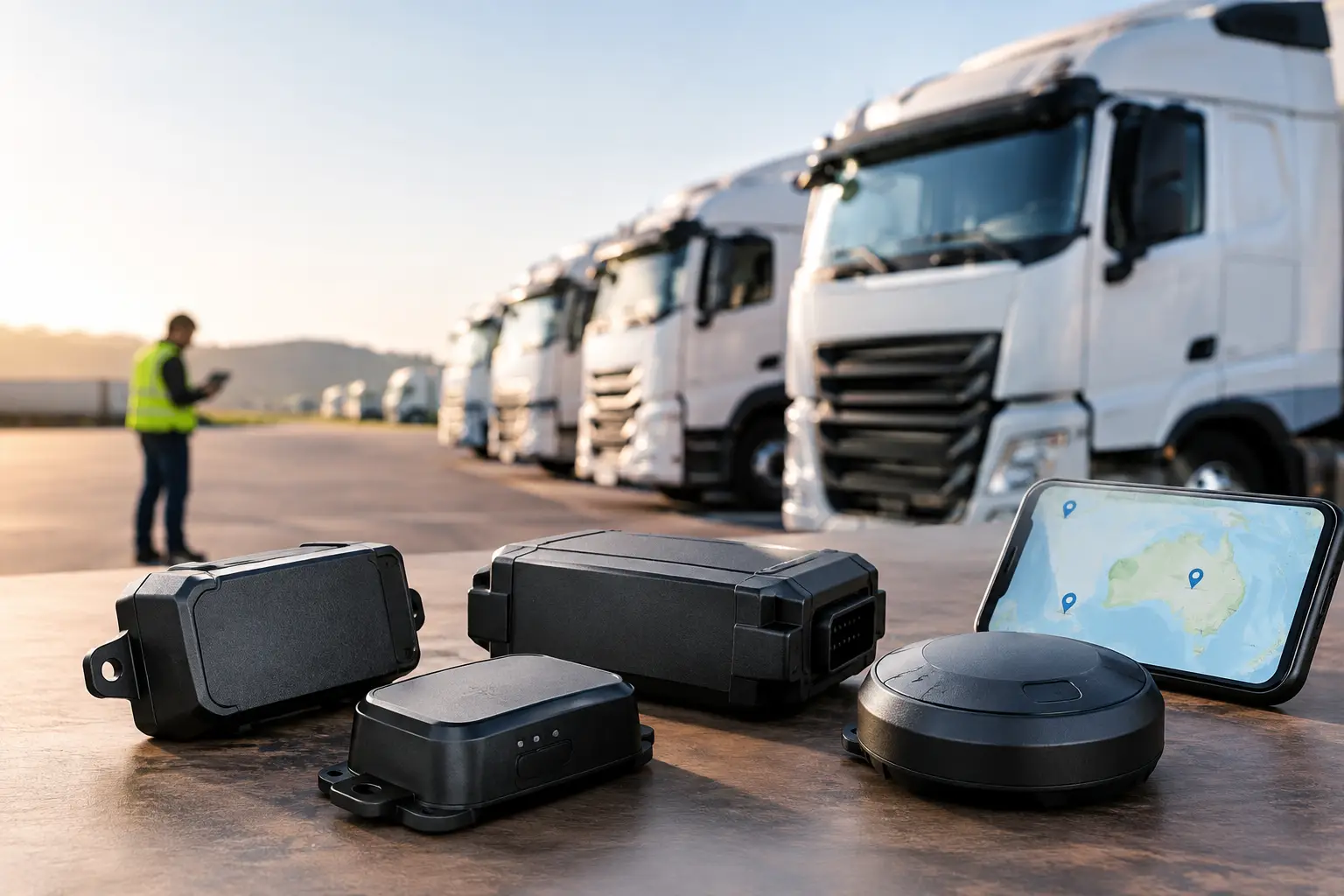
Connected telematics provides the operational picture behind the event. Real-time location, trip history, route activity, idling, harsh braking, acceleration, cornering and vehicle status can help supervisors understand what occurred and whether further action is needed. For heavy fleets, that picture should sit alongside fatigue, mass, pre-start and compliance records rather than in separate systems managed by different teams.
Visibility also changes the conversation from blame to prevention. If a particular depot exit regularly produces harsh braking events, the issue may be traffic flow, poor signage or unrealistic dispatch timing. If speeding increases late in a shift, scheduling pressure or fatigue controls may need review. Driver behaviour data is valuable, but it should be treated as evidence for improvement, not a substitute for sound management.
Build a safety system drivers can work with
Drivers are more likely to engage with safety technology when its purpose is clear and the process is fair. A camera or tracking device introduced solely as surveillance will create resistance. The same technology, explained as a way to protect drivers from false claims, identify hazardous conditions and provide timely coaching, has a far stronger chance of being accepted.
This does not mean ignoring serious events. It means applying a consistent process. Define what triggers a review, who can access the information, how long records are retained and what happens after an event. Minor, isolated incidents may call for a conversation or refresher training. Repeated high-risk behaviour or a serious collision requires a more formal response. The threshold should be understood before an incident occurs.
Video provides context when it matters most
AI driver cameras can detect behaviours such as distraction, mobile phone use, smoking, fatigue indicators and failure to wear a seatbelt. When configured properly, they can provide an immediate in-cab alert and send an event to a supervisor for review. This creates an opportunity to correct risk close to the moment it occurs, rather than relying on a report days later.
Video is particularly useful after a disputed event. Footage can show whether a driver was cut off, whether road conditions contributed, or whether another road user caused the incident. That context matters for insurance, incident investigations and driver support.
There are trade-offs. Camera alerts need sensible calibration, clear escalation rules and regular review. Too many low-value notifications create alert fatigue and reduce the likelihood that genuine high-risk events receive prompt attention. The objective is not to collect the maximum amount of footage. It is to identify the events that require action.
Make vehicle condition part of every shift
Many fleet incidents begin with defects that were visible before the vehicle moved. Tyres, lights, brakes, coupling equipment, loads, reversing alarms and safety guards all need attention, especially in heavy transport, construction, waste and plant operations. A paper pre-start form can work in a small, stable operation, but it is difficult to verify at scale and easy to misplace when an audit or investigation occurs.
Digital pre-start checks create a time-stamped record against the vehicle, asset and user. Drivers can report defects with notes and photographs, while maintenance teams can see whether an issue has been assigned, repaired or remains outstanding. The safety benefit is not simply digitising a checklist. It is ensuring a reported defect reaches the person who can act on it and that a vehicle is not returned to service without appropriate clearance.
For fleet managers, exception reporting is often more useful than reviewing every completed form. Focus on overdue inspections, unresolved critical defects, repeated issues on the same asset and vehicles operating despite a defect status. This directs attention to the failures that can create real exposure.
Manage fatigue as an operating risk, not paperwork
Fatigue management is one of the clearest examples of where safety, compliance and commercial pressure meet. A late concrete pour, a delayed tip, traffic congestion or an unplanned customer request can all affect a driver’s hours. If the operation only checks records after a shift, it may discover the problem when there is little ability to manage it.
A connected approach allows dispatch, supervisors and drivers to work from current information. Electronic work diaries, approved schedules, vehicle activity and fatigue workflows can help identify approaching limits and support a safer decision before a breach occurs. For operators working under HVNL obligations, reliable records and clear chain-of-responsibility processes are essential, but the practical outcome is more important: drivers should not have to choose between meeting a delivery promise and managing fatigue lawfully.
Technology cannot fix a schedule that is impossible from the start. Route planning, loading delays, site access, driver availability and customer commitments must be realistic. Fleet safety improves when planning teams are accountable for the conditions they create, not only when drivers are accountable for the decisions they make on the road.
Turn safety data into useful action
The most common failure with fleet data is collecting it without creating a review rhythm. A monthly report packed with hundreds of events may satisfy an internal requirement, but it rarely changes behaviour. A smaller set of agreed measures, reviewed consistently, is more effective.
A practical safety review may look at high-severity speeding, harsh driving trends, camera-detected distraction, overdue pre-starts, open defects, fatigue exceptions, collision frequency and repeat events by vehicle, route or work group. Measures should be compared over time and investigated in context. A sudden rise in harsh braking may reflect a driver issue, but it may also indicate a route change, urban congestion or a mechanical problem.
Managers should also recognise safe performance. When a driver reports a defect early, follows a difficult fatigue escalation process or demonstrates consistent improvement after coaching, that behaviour deserves acknowledgement. Safety culture is strengthened when people can see that responsible actions are noticed, not just mistakes.
Integration reduces gaps between teams
Fleet safety becomes harder when telematics, maintenance, compliance, payroll, dispatch and incident reporting operate in isolation. Teams spend time reconciling timestamps, chasing documents and debating whose system holds the correct record. Those gaps are where overdue defects, unreviewed events and unclear accountabilities can sit unnoticed.
An end-to-end platform does not remove the need for management discipline, but it can make that discipline easier to maintain. Vehicle activity can be matched to a driver, safety events can be reviewed against trip and camera context, and compliance workflows can retain an auditable record. For complex Australian fleets, including heavy vehicles, trailers, plant and specialised assets, the ability to manage different asset types through connected workflows is often more valuable than adding another standalone application.
This is where local implementation and support matter. Hardware must withstand real operating conditions, installers need to understand the asset, and the support team needs to resolve issues without passing responsibility between providers. Netcorp’s Australian-designed hardware and Sydney-based support model are built for that level of operational ownership.
Review incidents for system failures, not only driver errors
After an incident, there is understandable pressure to identify the immediate cause. But a useful investigation asks broader questions. Was the vehicle fit for the task? Was the route appropriate? Had a similar event occurred before? Were the driver’s hours, training, load and site instructions suitable? Did supervisors have information that should have prompted earlier intervention?
This approach does not dilute individual responsibility. It helps prevent the same failure appearing in another vehicle, another depot or another shift. Incident evidence from telematics, video, pre-start records and maintenance history gives investigators a clearer basis for action than recollection alone.
The strongest safety programs are visible in ordinary shifts, not only after a serious event. Start with the risks your people encounter most often, make reporting and review straightforward, and use connected evidence to act before a small warning becomes an avoidable loss.