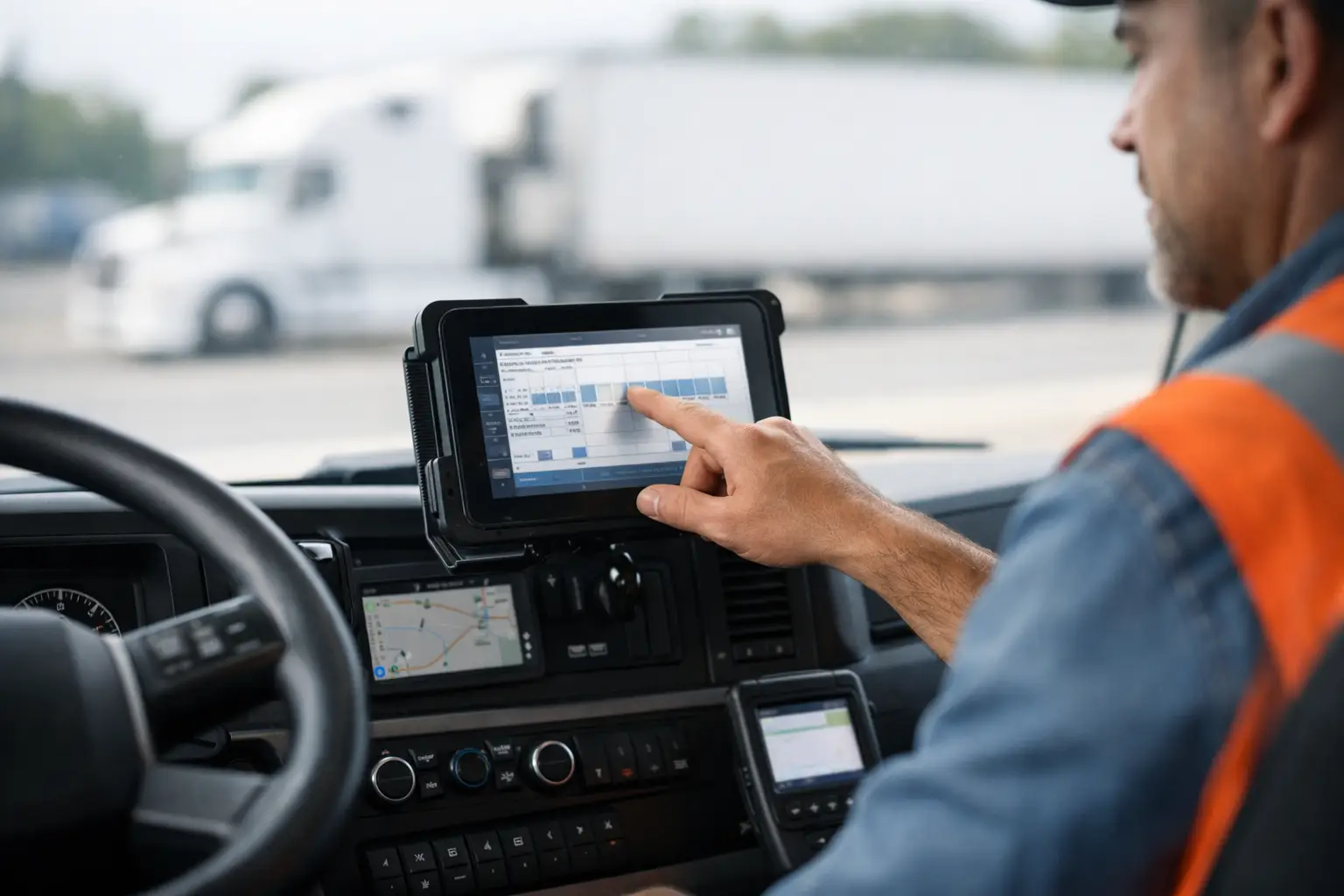
A driver pulled up for a roadside inspection should be able to show accurate work and rest information without searching through paper pages, correcting handwriting or relying on memory. For Australian heavy-vehicle operators, an electronic work diary system can make that outcome far more achievable - but only when the technology, vehicle installation and fleet processes are properly aligned.
An approved Electronic Work Diary, or EWD, is not simply a digital timesheet. It is a regulated fatigue-management tool that records a driver’s work and rest hours and applies the relevant work and rest rules. For businesses running fatigue-regulated heavy vehicles, that creates a more reliable record at the roadside, in the depot and during an audit.
What is an electronic work diary system?
An electronic work diary system replaces the manual written work diary with an approved digital method of recording work and rest. It captures required fatigue information as the driver’s day progresses, helping the driver understand their available hours and helping the operator maintain verifiable records.
The system must be approved for use by the National Heavy Vehicle Regulator (NHVR). Approval matters. A general fleet app, mobile timesheet or GPS platform may record timestamps and vehicle movements, but it is not automatically an EWD that can replace a written work diary.
For an eligible driver, the EWD records work and rest events against the applicable fatigue rules. It can also present current status information, such as available work time or the next required rest break, based on the driver’s declared activity and the rules configured for their work arrangement. This gives drivers a practical reference point during demanding shifts, particularly when work involves multiple loads, changing delivery windows or regional travel.
The value extends beyond the cab. Authorised fleet staff can access diary records through the operator’s system, subject to the relevant access controls. That makes it easier to review fatigue information, respond to exceptions and produce records when required.
Why paper diaries create operational friction
Paper work diaries remain familiar to many drivers and operators, but familiarity does not remove their limitations. Entries can be difficult to read, entered late, damaged, incomplete or calculated incorrectly. A small recording error can become a time-consuming issue when a business needs to demonstrate that it has managed fatigue risk appropriately.
Paper processes also separate fatigue records from the operational systems used to manage vehicles, jobs and people. A transport manager may be looking at a vehicle’s location on one screen, a roster in another system and a paper diary in the driver’s possession. That fragmentation slows decisions when a job is delayed, a driver is approaching a limit or an unexpected diversion changes the shift plan.
An EWD does not eliminate the need for good management. Drivers still need to make correct work and rest declarations, and supervisors still need to plan work realistically. What it changes is the quality and availability of the record. Rather than reconstructing a shift from paperwork after an event, the fleet has a more immediate and consistent source of fatigue data.
How the system supports fatigue compliance
Fatigue compliance is not achieved by installing a device. It depends on the interaction between driver behaviour, scheduling, work practices, vehicle operation and oversight. An electronic diary supports that process in several practical ways.
Clearer records for drivers and authorised officers
The driver has a digital record of their work and rest activity that can be produced during a roadside check. Where a driver changes vehicles, works across multiple locations or completes a varied shift, the electronic record can reduce the administrative burden of maintaining manual pages.
For authorised officers and compliance teams, digital records are easier to retrieve and assess than a collection of paper diaries. This is particularly useful when an operator needs to respond promptly to an audit, incident investigation or customer assurance request.
Earlier visibility of fatigue risk
A well-deployed system can show approaching work and rest limits before they become a breach. That does not mean a control room should direct every driver decision from a distance. It means transport planners and supervisors have better information to adjust a run, reallocate a job or arrange a rest break before operational pressure creates a poor decision.
This is valuable in sectors where the day rarely follows the original plan. Concrete, waste, construction and regional transport fleets can face queueing, weather, site access restrictions, breakdowns and extended loading times. The ability to see fatigue status alongside operational activity supports more realistic intervention.
Better evidence of management action
Under Heavy Vehicle National Law, the Chain of Responsibility means fatigue risk is not the driver’s issue alone. Schedulers, supervisors, loaders, consignors and executives may all influence whether work can be completed safely and legally.
An EWD provides a stronger audit trail than an informal verbal check. It can help show when a risk was identified, what hours were available and whether a job or roster was changed in response. The record will not excuse an unreasonable schedule, but it can support a disciplined fatigue-management process.
Where telematics adds operational context
An EWD is purpose-built for regulated work and rest records. Fleet telematics serves a different, complementary purpose by providing vehicle location, route history, ignition activity, driver behaviour and asset data. When the two are implemented as part of a connected fleet environment, managers can assess fatigue information in the context of what is happening on the road.
For example, a planner may see that a vehicle is delayed at a site while the driver’s available hours are reducing. That is more useful than receiving a late call after the shift has already become unworkable. Similarly, location information can assist with planning a suitable stop, coordinating a replacement vehicle or communicating accurate arrival expectations to a customer.
The boundary between systems should remain clear. Telematics data alone is not a substitute for an approved electronic work diary. The EWD remains the compliance record, while telematics supplies operational visibility that helps the business make better decisions around it.
Choosing an electronic work diary system for your fleet
The right choice depends on fleet size, operating geography, driver turnover, work patterns and existing technology. A long-haul fleet working across state borders has different needs from a council fleet, a concrete operation or a construction business moving plant between sites.
Start with approval status and suitability for the relevant fatigue arrangements. Confirm that the solution is approved by the NHVR and that it supports the work and rest options used by your drivers. Do not assume every electronic diary product applies to every operating scenario.
Then assess how it will work in the cab. Drivers need a device and interface that are practical in real conditions: early starts, gloves, vibration, poor weather, variable mobile coverage and tight site turnaround. Hardware selection, installation quality and training all affect adoption. If logging an activity is awkward, drivers will find workarounds, and the quality of the record will suffer.
Integration is the next consideration. A disconnected EWD may meet a narrow compliance requirement, but it can create extra administration if dispatch, vehicle tracking, pre-start checks and reporting sit elsewhere. An integrated platform can reduce duplicate handling and give teams a clearer operational picture. However, integration should not be pursued just because it is available. The business case should be based on measurable needs such as reduced admin time, faster exception management, fewer diary errors or stronger audit readiness.
Finally, assess support. Fleet compliance systems are used outside standard office hours, often by drivers working in remote locations. A provider should be able to support deployment, configuration, user training, device replacement and technical issues over the life of the system. Local expertise also matters when regulations, approval requirements or operating practices change.
Implementation requires more than a device rollout
A successful rollout begins with a review of current fatigue processes. Identify which drivers use written work diaries, what fatigue arrangements apply, how roster changes are approved and who is responsible for monitoring exceptions. This baseline prevents technology from being layered over unclear procedures.
Driver engagement should happen early. Explain what the system records, how roadside inspections work, what the driver needs to do and who can access the information. Position the EWD as a tool for accurate records and safer planning, not as a surveillance exercise. Drivers are more likely to use it correctly when they understand its compliance purpose and can raise practical concerns before full deployment.
A staged pilot is often sensible for complex fleets. Trial the system with a representative group of vehicles, routes and drivers, then review training gaps, connectivity issues, reporting workflows and support demand. The pilot should test unusual conditions as well as ordinary shifts, including vehicle changes, unplanned delays and drivers returning after a rest break.
Netcorp can support this approach through an Australian-delivered fleet platform, heavy-vehicle compliance capability, in-house hardware and 24/7 technical support. For operators managing multiple fleet technologies, the objective is straightforward: reduce fragmented ownership while retaining the records and visibility needed to run safely.
An electronic work diary system is most effective when it helps a driver make the next safe decision and helps the business remove the pressure that makes that decision difficult. That is where compliance records become a practical operational control, not another administrative task.