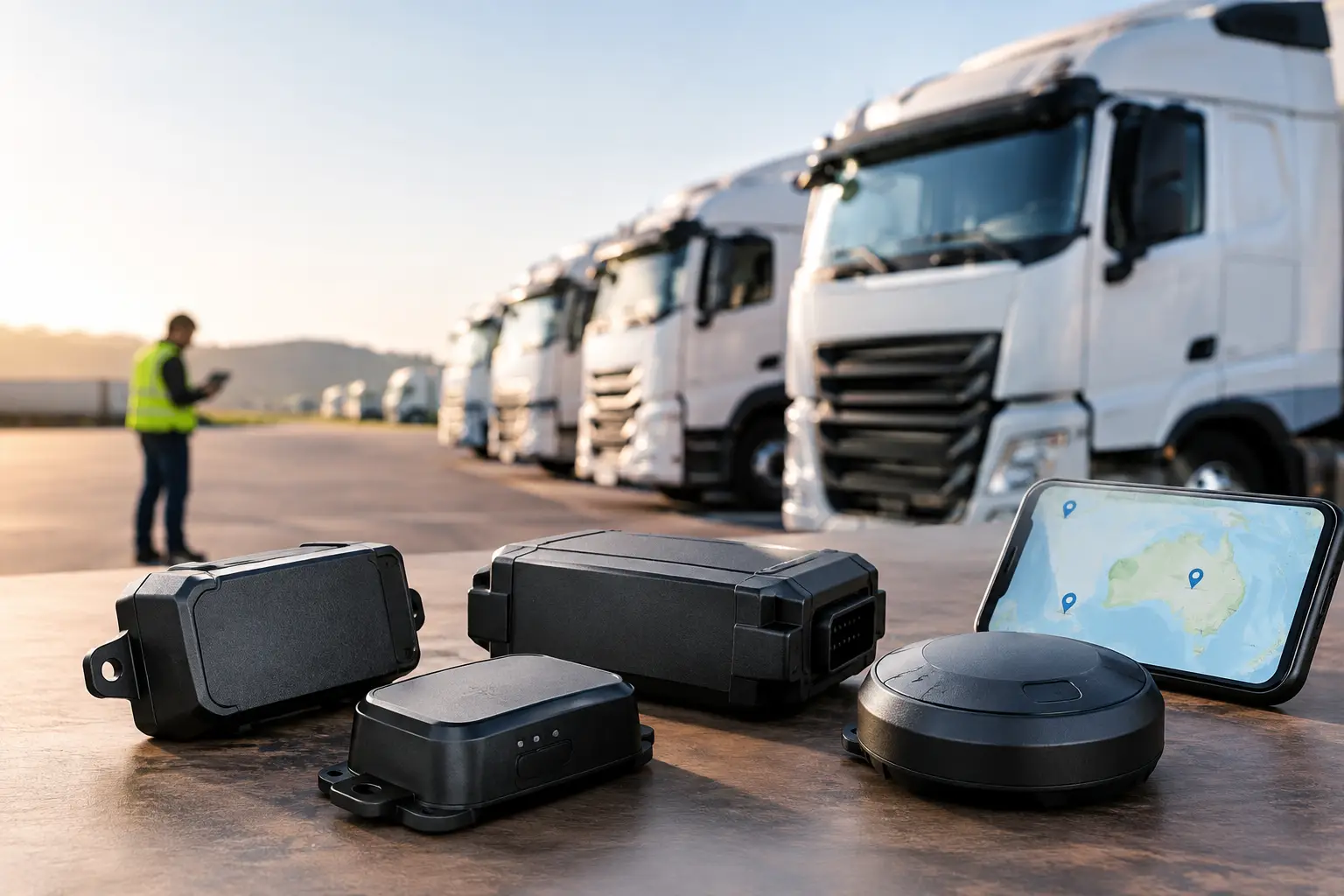
A trailer that disappears between depots, a skid steer parked on the wrong site, or an agitator with no verified activity record can create far more than an inconvenience. It can mean missed jobs, disputed charges, unplanned hire costs and avoidable compliance exposure. The best asset tracking hardware gives fleet operators reliable evidence of where critical equipment is, whether it is moving and, where required, how it is being used.
For Australian operations, selecting hardware is not simply a matter of choosing the smallest GPS device at the lowest price. The right unit must suit the asset, the working environment, the reporting required and the level of support your team needs after installation. A tracker that works well on a metro service vehicle may be unsuitable for a trailer travelling interstate, a machine operating in a quarry or a marine asset exposed to salt and vibration.
What makes the best asset tracking hardware?
The best asset tracking hardware is hardware that produces dependable, useful data for the asset’s full operating life. Location accuracy matters, but it is only one part of the decision. A practical deployment also considers power source, mounting method, network coverage, update frequency, environmental protection and integration with the fleet platform.
For a fleet manager, the question is usually not, “Can we see this asset on a map?” It is, “Can we confirm where it was, how long it was there, whether it was active, and who needs to act on the information?” Hardware should be selected around that operational outcome.
A fixed GPS tracker on a powered vehicle can provide frequent updates, ignition status and input data. A battery-powered unit may be a better fit for trailers, bins, attachments and non-powered plant, where installation needs to be simple and battery life is more valuable than second-by-second reporting. For high-value equipment, concealed installation and tamper alerts may take priority. There is no single device that is best for every asset class.
Start with the asset and operating conditions
Asset tracking projects are more successful when hardware selection begins with a clear asset register. Separate powered vehicles, trailers, fixed plant, mobile machinery, containers, specialist equipment and marine vessels. Each category has different power availability, exposure risks and data needs.
Powered vehicles and mobile plant
Hard-wired units are generally the strongest option for trucks, utes, light vehicles and plant with a reliable electrical supply. They can report more frequently while the asset is operating and can capture ignition or engine-run signals. Depending on the installation and vehicle interface, they may also support inputs such as PTO activity, door status, auxiliary equipment use or panic functions.
This is particularly useful where utilisation is tied to revenue, labour allocation or maintenance planning. A concrete fleet, for example, may need visibility beyond vehicle position to understand the activity stages that affect dispatch and customer service. Construction and waste operators may need to distinguish travel time from productive equipment time.
Hard-wired hardware requires professional installation. Poor wiring, weak mounting or an unsuitable location can create intermittent data, vehicle faults or unnecessary maintenance call-outs. Installation quality should be treated as part of the solution, not an afterthought.
Trailers, attachments and unpowered assets
Battery-powered trackers are suited to assets without a dependable power source. They are commonly used on trailers, generators, skips, pumps, shipping containers and plant attachments. Their principal trade-off is reporting frequency. More location updates provide better visibility, but consume battery capacity faster.
For some assets, one or two scheduled position reports each day are enough. For others, movement-based reporting is more useful: the unit wakes when it detects travel, then returns to a low-power state when stationary. This approach can provide meaningful exception alerts without replacing batteries more often than the operation can reasonably manage.
Consider how the unit will be mounted and serviced. A tracker needs protection from impact, mud, water and deliberate removal, while still being accessible when a battery change is required. Hardware with suitable ingress protection and a proven mounting arrangement is a better investment than a device that is easy to fit but vulnerable in the field.
Harsh, remote and specialist environments
Quarries, civil works, waste facilities and marine operations place additional demands on hardware. Dust, vibration, wash-down procedures, temperature changes and salt exposure can shorten the life of poorly specified units. Check the device’s environmental rating, operating temperature range, enclosure design and mounting recommendations against the actual conditions on site.
Network coverage also needs a realistic assessment. Cellular tracking is effective across much of Australia, but regional routes and remote worksites can have black spots. Store-and-forward capability is valuable because the device can retain location records while out of coverage and upload them when service returns. For assets that regularly travel beyond mobile coverage, satellite-based options may be justified, although they carry a higher equipment and communications cost.
Match reporting frequency to the decision being made
A common procurement mistake is specifying the highest possible update rate for every asset. Frequent reporting can be useful for live dispatch, theft recovery and safety-related monitoring. It is less valuable for a stationary water tank, a low-use attachment or a trailer that only needs movement alerts.
Define the decision the data must support. If dispatchers need to allocate the nearest available unit, near-real-time location updates are appropriate. If the objective is to locate assets at the start of each shift, scheduled reporting may be sufficient. If the risk is unauthorised movement, geofence and after-hours alerts can be more useful than constant tracking.
This matters commercially. A sensible reporting strategy protects battery life, reduces unnecessary mobile data use and keeps the platform focused on exceptions that require action. More data is not automatically better data.
Look beyond GPS location
GPS location establishes where an asset is. Operational control often requires more context. The most suitable hardware can support sensors, inputs or integrations that convert position into an actionable record.
For powered equipment, this may include ignition state, engine hours, PTO use, temperature, door opening or equipment engagement. For trailers, it may include coupling status, door sensors or movement detection. For specialised fleets, the requirements can extend to compliance and safety workflows, including pre-start checks, fatigue-related records, driver identification or onboard mass information.
The value comes from presenting these events in one platform alongside vehicle and driver data. Separate tracking portals for trucks, trailers and plant make it harder for operational teams to identify what is available, what has moved and what requires attention. One platform also gives managers a cleaner audit trail when investigating customer disputes, unauthorised use or incidents.
Installation, support and hardware lifecycle matter
Asset tracking hardware is usually expected to operate for years, often in places nobody thinks about until something goes missing. That makes deployment standards and ongoing support central to the purchase decision.
Before committing, establish who will install the hardware, test data transmission, label the device against the asset register and document the installation location. Confirm how faults are diagnosed, how replacements are handled and whether local technical support is available outside ordinary business hours. For national fleets, consistency across branches and contractors is essential.
Security should also be considered. Tracking devices transmit commercially sensitive location and operational data. Select a provider that can explain how hardware, communications, user access and platform data are managed. Organisations working with government contracts, critical infrastructure or sensitive customer locations should make this a formal part of vendor assessment.
Netcorp designs, deploys and supports fleet and asset tracking hardware from Australia, pairing device selection with a single operational platform and 24/7/365 technical support. For complex fleets, that ownership model reduces the hand-offs that can occur when hardware, software, installation and support are sourced separately.
Questions to ask before purchasing
A supplier should be able to answer practical questions without vague assurances. Ask whether the device is suited to your asset type and operating environment; how long its battery will last at your required reporting rate; what happens when it loses mobile coverage; and how it alerts you to movement, tampering or low battery.
Also ask what information is available beyond location, how the unit is installed and replaced, and whether the reporting can be viewed with your vehicle, driver and compliance data. If the answer relies on multiple unrelated systems, factor the administration burden into the total cost.
Price should be assessed over the full deployment lifecycle. A low-cost tracker can become expensive if it requires frequent site visits, produces unreliable data or cannot support the workflows that justified the project. Conversely, highly specified hardware may be unnecessary for low-risk assets with simple location requirements.
The right choice is the hardware that keeps working in the conditions your assets actually face and delivers information your team can act on. Start with the operational decision, specify the device around it, and insist on a support model that remains accountable long after the tracker is fitted.