A disputed merge, a pedestrian near a reversing waste truck, or a harsh-braking alert on a B-double can become a costly operational issue within minutes. The right truck camera features give fleet teams verified context around these events, so decisions are based on evidence rather than recollection, assumptions or incomplete reports.
For Australian fleets, a camera system should do more than record vision. It needs to work in demanding conditions, connect with vehicle and driver data, support fair coaching, and provide footage when the business actually needs it. That means looking beyond camera resolution and asking how the full system will perform across your routes, vehicles, sites and compliance obligations.
Truck camera features that matter in fleet operations
The most valuable camera capability depends on the risk profile of the vehicle and the work it performs. A metro delivery truck faces different exposures from a concrete agitator entering tight sites, a waste collection vehicle operating around pedestrians, or a long-haul prime mover travelling regional corridors. Still, several features consistently deliver value across commercial fleets.
Multi-camera coverage around the vehicle
Forward-facing cameras are often the starting point because they capture road conditions, traffic interactions and the lead-up to a safety event. They can help confirm following distance, lane position, vehicle cut-ins and whether a driver had a reasonable opportunity to respond.
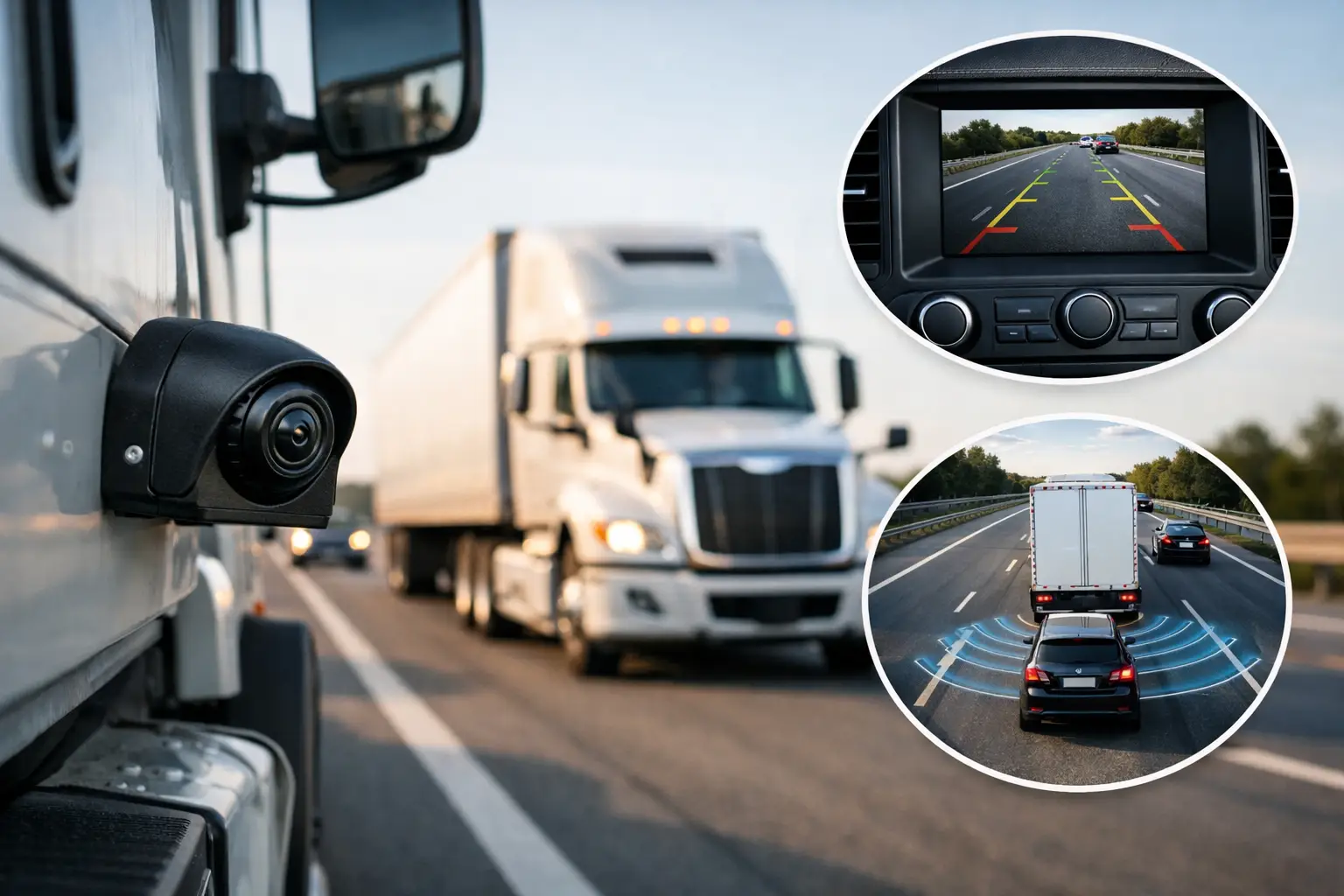
However, a forward view alone leaves major blind spots. Side cameras can provide visibility along the length of rigid trucks and trailers, while rear cameras assist during reversing and loading-area movements. For higher-risk operations, a multi-camera configuration can combine forward, driver-facing, side and rear vision in one event record.
The practical benefit is not simply more footage. It is a clearer account of what occurred around the vehicle. This can assist incident investigations, customer disputes, insurance claims and internal safety reviews, particularly where vulnerable road users, site personnel or third-party vehicles are involved.
Driver-facing vision with privacy controls
Driver-facing cameras are one of the most discussed features in commercial fleets. Used properly, they provide vital context for fatigue, distraction, mobile phone use, seatbelt compliance and other high-risk behaviours. When connected to an AI event engine, the system can identify potential concerns and bring them to the attention of an authorised fleet or safety team.
The trade-off is clear: driver acceptance depends on transparent implementation. Operators should define why cameras are being fitted, what events are reviewed, who can access footage, how long it is retained and how the system will be used in coaching and investigation processes. A driver-facing camera should support a documented safety program, not create a culture of constant surveillance.
A strong policy, consultation with drivers and supervisors, and consistent handling of events are as important as the camera hardware. The objective is to reduce preventable risk while treating people fairly.
AI detection that prioritises genuine risk
AI-enabled cameras can identify behaviours and conditions that may otherwise go unnoticed until they contribute to an incident. Depending on the system, detection may include distraction, drowsiness indicators, mobile phone use, smoking, seatbelt non-compliance, harsh braking, tailgating and lane departure.
The benefit is scale. A large fleet cannot reasonably expect managers to review hours of footage from every vehicle each day. AI can flag relevant clips for review, allowing teams to focus on exceptions and coach drivers before poor habits become serious events.
AI is not a substitute for management judgement. False alerts can occur, and context matters. A harsh-braking event may be appropriate when a vehicle pulls out unexpectedly. A fatigue alert may require a conversation rather than an assumption. The best outcome comes from combining AI-generated event data with video, vehicle telemetry, route conditions and the driver’s account.
Event-triggered recording and evidence protection
Continuous recording has its place, but event-triggered video is often what protects the fleet when an incident occurs. A system can preserve footage from before, during and after a trigger such as harsh acceleration, braking, cornering, impact detection or an AI safety alert.
Pre-event recording is particularly important. Footage beginning at the moment of impact may show the result but not the sequence that led to it. Capturing the preceding seconds gives investigators a far better view of traffic flow, road position and driver response.
Fleet managers should also check how footage is stored and retrieved. Key questions include whether files can be automatically uploaded, whether recordings remain available if power is interrupted, how quickly clips can be accessed, and whether event footage can be locked against accidental overwrite. These details determine whether a camera system is useful after a serious event or merely present on the vehicle.
GPS, speed and telematics integration
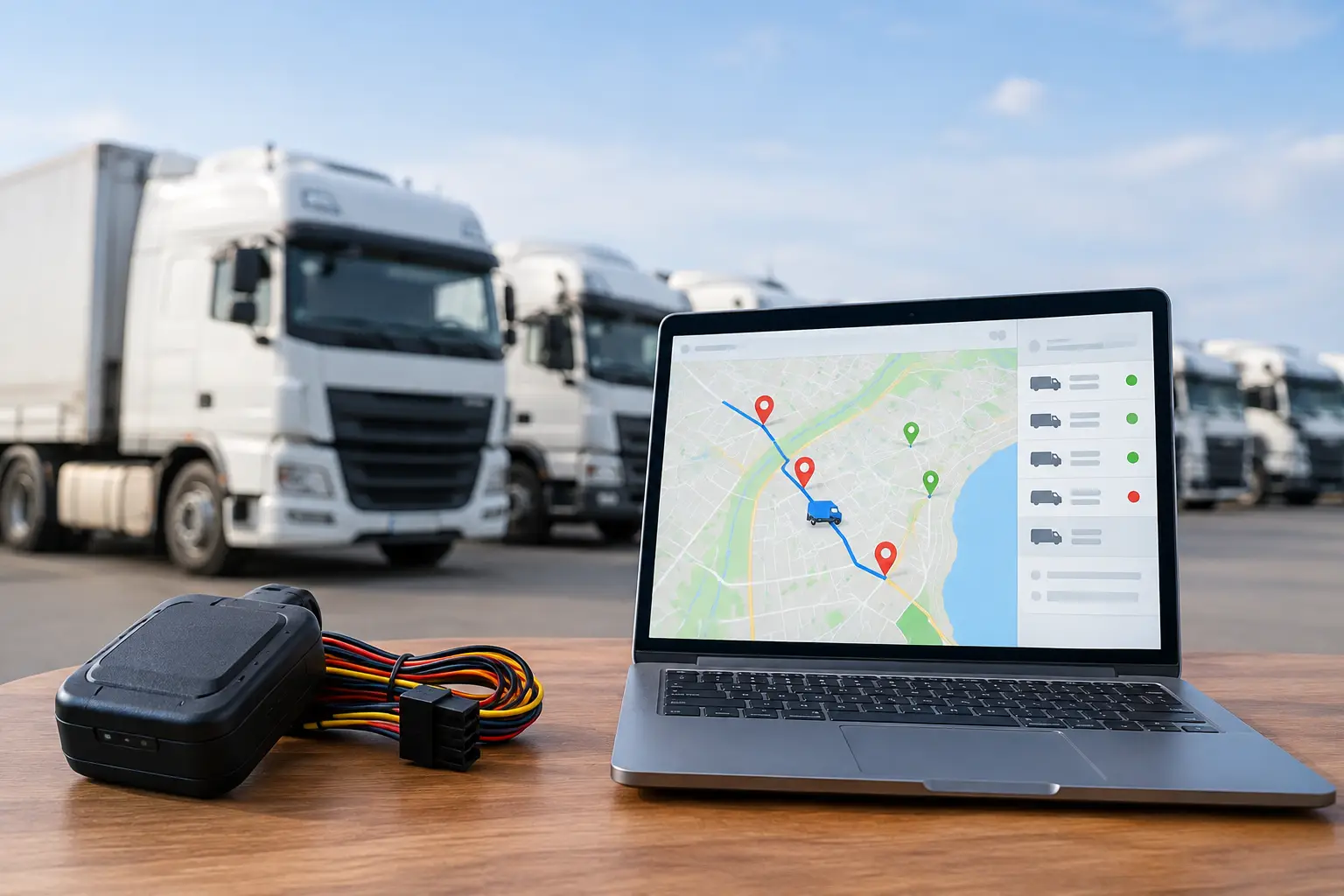
Video is more useful when it is connected to the operating data behind the event. GPS location, speed, route history, ignition status, harsh driving data and vehicle inputs can establish a more complete timeline.
For example, footage of a reversing incident becomes more actionable when the team can see the precise site location, vehicle speed, time on site and any associated sensor or driver-behaviour event. A heavy-vehicle operator may also need to assess the event alongside work and rest records, pre-start outcomes or other compliance information.
This is where disconnected systems create unnecessary work. If video sits in one portal, tracking in another and compliance records elsewhere, supervisors spend time piecing together information when they should be responding to the issue. An integrated platform reduces that administrative burden and improves the quality of operational decisions.
Features that need to suit Australian working conditions
Truck camera hardware operates outside an office environment. Heat, vibration, dust, rain, wash-down procedures and long operating hours can expose weaknesses in poorly selected equipment. A unit that performs well in a light commercial vehicle may not be suitable for a quarry truck, tipper, agitator or waste collection vehicle.
Image quality matters, especially in low light, glare and poor weather. High-definition recording can help identify registration plates, road markings and critical activity around the vehicle, but resolution is only one part of the requirement. Lens position, night performance, field of view and installation quality all affect what can actually be seen.
Camera placement requires equal care. A side camera fitted too high or at the wrong angle may not cover the area where cyclists, pedestrians or site workers are most exposed. A rear camera can be obscured by dust, mud or loading equipment. In some applications, protective housings, suitable cable routing and regular inspection should be part of the deployment plan.
Connectivity also needs realistic expectations. Mobile coverage varies across Australia, particularly for regional transport, construction and remote operations. A practical camera system should continue recording locally when coverage is limited, then upload priority events when a connection is available. Fleets should understand which footage is available live, which is uploaded on exception, and what data costs apply at scale.
Using camera events for coaching, not just discipline
The strongest camera programs improve driver performance over time. They do not rely on collecting a large volume of alerts and issuing reactive warnings. Instead, fleet teams identify recurring risk patterns, verify the circumstances and use short, specific coaching conversations to address them.
A driver who repeatedly receives following-distance alerts may need route-specific guidance, refresher training or support to manage delivery schedules that encourage rushed behaviour. A cluster of reversing events at one depot may indicate a site-layout problem, poor signage or inadequate separation between vehicles and pedestrians. Camera data can reveal operational causes that are not visible in an individual event report.
This approach also gives fleets a fairer way to recognise good driving. Verified footage can demonstrate that a driver took appropriate evasive action, followed site rules or was not at fault in a complaint. Safety systems gain trust when they protect professional drivers as well as identify risks.
Selecting the right camera configuration
Start with the highest-risk tasks rather than a generic feature checklist. Consider the vehicle type, operating environment, likely incident types, driver interaction with the public, travel distances, site conditions and existing telematics capability. A long-haul fleet may prioritise forward and driver-facing AI cameras, while a waste or construction operation may need additional side and rear coverage.
Then assess the delivery model. Hardware, installation, platform access, footage management, user permissions, driver policy and ongoing support must work together. A camera system can fail operationally even when the technology is capable, simply because footage is difficult to retrieve, alert volumes are unmanaged or local support is unavailable when vehicles are off the road.
For fleets requiring an Australian-supported, integrated approach, Netcorp combines AI driver camera technology with telematics, heavy-vehicle compliance workflows and local technical support. The aim is not to add another screen for supervisors to monitor. It is to create usable evidence and earlier safety intervention from one connected fleet environment.
The right camera feature set is the one that helps your team act earlier, investigate fairly and keep vehicles working safely. Before specifying hardware, map the incidents you most need to prevent and the evidence your operation needs when they occur. That exercise will usually make the right configuration clear.