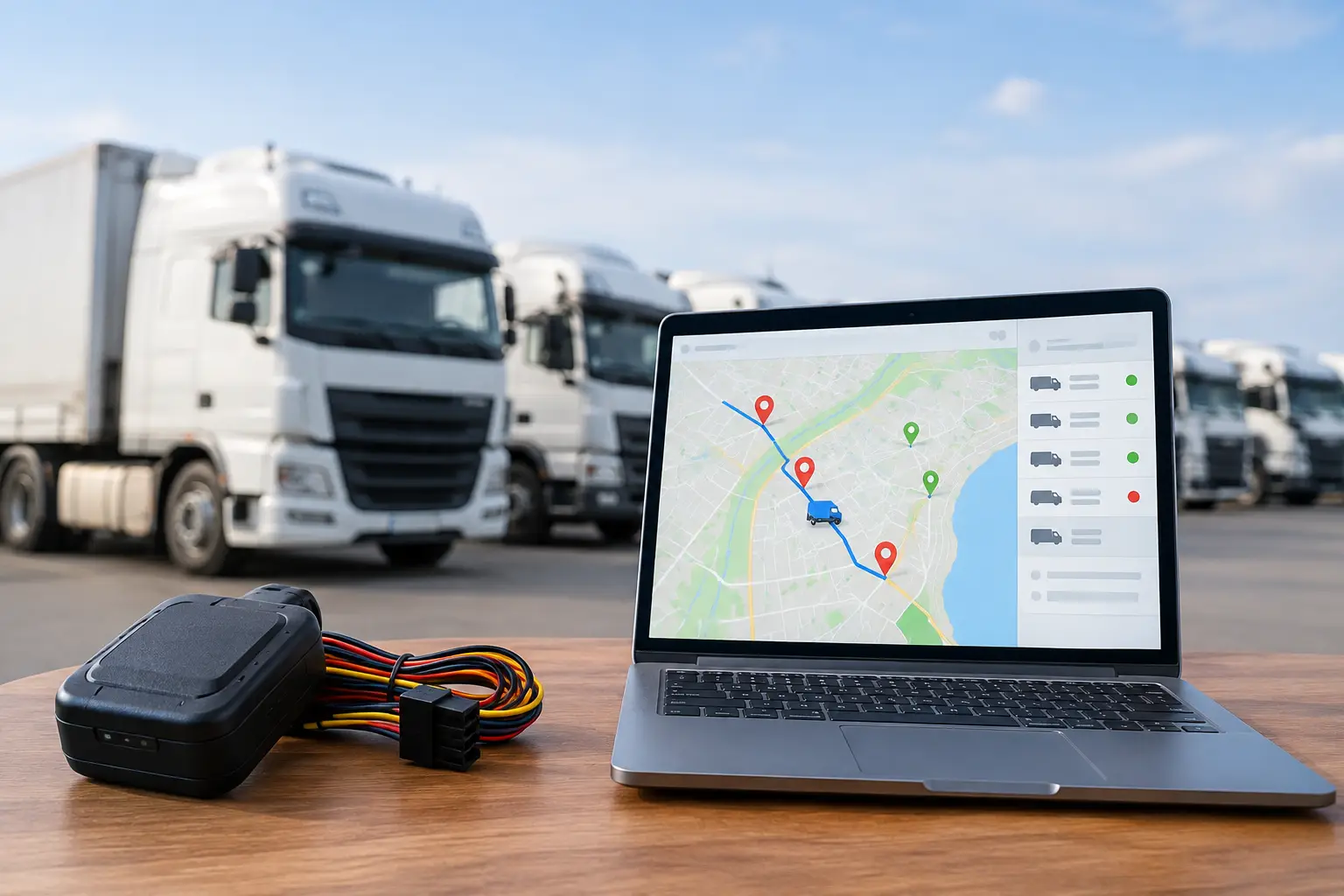

A fleet software shortlist should not begin with a feature comparison. It should begin with the operational decisions your team needs to make before the next vehicle leaves the yard: where is it, is the driver safe, is the work progressing, is the vehicle compliant, and can the record stand up to scrutiny?
For Australian fleet operators, the right platform is rarely just a GPS tracking system. It needs to work across vehicles, trailers, plant and people while supporting the practical demands of safety, fatigue, mass, customer service and cost control. A well-built shortlist prevents procurement from selecting software that looks capable in a demonstration but creates gaps in the field.
Start your fleet software shortlist with the operating problem
Software should be assessed against the work your fleet performs, not a generic list of telematics functions. A concrete fleet needs different visibility from a long-haul transport business. Waste collection, civil construction, plant hire and government fleets each have different asset types, work patterns, risks and compliance obligations.
Define the decisions that are difficult to make today. This might be identifying unauthorised vehicle use, verifying a pre-start check, responding to a fatigue breach, locating a trailer, validating time on site or investigating a safety event. If a platform cannot provide timely, reliable evidence for those decisions, additional features will not compensate.
It is also worth separating immediate operational needs from strategic goals. Real-time location and driver behaviour alerts may be essential from day one. Reducing overtime, improving asset utilisation and identifying recurring maintenance patterns may need several months of quality data. Both matter, but they should be measured differently.
Map requirements by fleet type and role
A single system may serve drivers, dispatchers, fleet managers, safety teams, payroll, finance and IT. Each group needs information in a different form. Dispatch may need live maps and arrival data, while compliance leaders need auditable records and exception reporting.
Include representative users in the assessment early. A platform chosen solely by procurement or IT can miss practical requirements such as in-cab usability, site connectivity, trailer identification or workflows that drivers can complete without slowing down a shift.
Assess the platform, hardware and support as one system
The software interface is only one part of fleet technology. Data quality depends on the hardware installed in the vehicle or asset, the way it is configured, and the team responsible for maintaining it. A low-cost tracking device can become expensive when it produces inconsistent data, requires repeated replacement or cannot support the inputs needed for your operation.
Ask providers how their hardware performs in heavy vehicles, plant, trailers and harsh operating environments. Confirm what data can be captured from vehicle systems, auxiliary equipment and sensors. For some fleets, engine hours, PTO activity, door status, bin lifts, agitator operation or trailer coupling are as commercially relevant as vehicle location.
Local capability matters when faults occur. An interstate or overseas support model may suit a simple light-vehicle deployment, but complex fleets need clear ownership of installation, configuration, troubleshooting and replacements. Netcorp's end-to-end Australian model - with hardware designed, built and supported from Sydney - is designed to reduce the hand-offs that often occur between hardware suppliers, software vendors and field contractors.
Test data reliability, not just dashboard design
During demonstrations, ask to see how the platform handles poor GPS coverage, missed driver identification, device tampering, delayed data transmission and vehicle changes. These are normal conditions in live operations, not edge cases.
A useful test is to select several incidents from the previous three months: a customer query, speeding event, missed service, fatigue concern, disputed timesheet or damaged asset. Ask each provider to show exactly how its system would help investigate and resolve the event. This exposes the difference between a polished dashboard and an operational tool.
Put compliance workflows under close review
Heavy-vehicle compliance should not sit outside the fleet platform as a separate manual process. When EWD, fatigue management, onboard mass, pre-start inspections and maintenance evidence live in disconnected systems, teams spend more time reconciling information and less time acting on risk.
For fleets operating under HVNL requirements, review whether the system supports your actual chain of responsibility processes. It should help assign responsibility, surface exceptions, retain records and demonstrate that controls were applied consistently. The right solution will not replace management judgement or legal obligations, but it can make compliance activity visible and traceable.
Ask practical questions. Can a driver complete a pre-start check on a mobile device? Can defects be escalated before a vehicle is dispatched? Can safety or compliance teams see exceptions by depot, vehicle, driver or date range? Can reports be produced quickly when an auditor, customer or regulator requests evidence?
The answer may depend on fleet size and risk profile. A small local fleet may need straightforward digital inspections and location reporting. A national heavy-vehicle operation may need integrated EWD, mass and fatigue workflows, detailed audit trails and role-based access controls. A shortlist should distinguish between these needs rather than paying for complexity that will not be used.
Compare commercial value beyond the monthly fee
The lowest subscription price is not always the lowest operating cost. Assess the full cost of ownership across hardware, installation, connectivity, integrations, training, support, replacement units and internal administration. Also consider the cost of not having accurate information when a vehicle is delayed, an asset goes missing or a safety matter needs investigation.
Build a business case around measurable operational outcomes. Depending on the fleet, these may include reduced overtime, fewer unauthorised kilometres, better utilisation, lower idling, faster response to breakdowns, improved maintenance planning or less time spent compiling compliance records. Baseline current performance before deployment so the result can be verified.
Avoid accepting broad savings claims without defining the source data. For example, an overtime reduction is meaningful only if timesheets, job allocation and GPS evidence support the comparison. The same discipline should apply to fuel, utilisation and safety metrics.
Check implementation capability before signing
Fleet software implementation is an operational change program, not an app rollout. Vehicles need to be scheduled for installation, drivers need clear instruction, data fields need to be configured, and reporting must reflect how the business actually works. Poor deployment can undermine confidence even when the underlying technology is sound.
Ask each provider for a deployment plan covering site surveys, installation quality assurance, device commissioning, driver training, administrator training and escalation procedures. Confirm who owns each task. This is particularly important where fleets operate across multiple depots, remote sites or mixed vehicle classes.
Integration should also be assessed carefully. A platform may need to exchange information with maintenance, payroll, job management, ERP or customer systems. Do not treat integration as a simple tick-box question. Establish what data moves, how often it moves, who monitors failures and how changes will be managed over time.
Include IT and security in the decision
Fleet data can reveal vehicle locations, driver activity, customer sites and operational patterns. Procurement and IT teams should review access controls, data retention, hosting arrangements, device security and incident management alongside the functionality.
Look for evidence of mature quality and information-security practices rather than relying on assurances alone. ISO 9001 and ISO 27001 certification provide useful indicators that a provider has documented systems for quality management and information security, though they should sit alongside your own due diligence.
Use a weighted shortlist, then run a field-based pilot
Once requirements are clear, limit the fleet software shortlist to providers that meet the essential operational and compliance criteria. Score them against weighted categories such as operational fit, compliance capability, data quality, hardware suitability, implementation, support, security, integrations and whole-of-life cost.
A pilot should use real vehicles, real drivers and real work conditions. Include different vehicle types where possible, such as a prime mover, rigid truck, ute, trailer or plant asset. Run it long enough to test reporting cycles, exception handling and support responsiveness, not just live tracking.
Set success measures before the pilot starts. These may include installation completion rates, location accuracy, time taken to resolve alerts, driver adoption, report usability and the quality of evidence available for a selected compliance workflow. A provider that performs well under these conditions is far more likely to deliver value at scale.
The strongest choice is the one that gives your team dependable information when it matters, fits the way your fleet operates and has the local capability to support the system long after installation day.