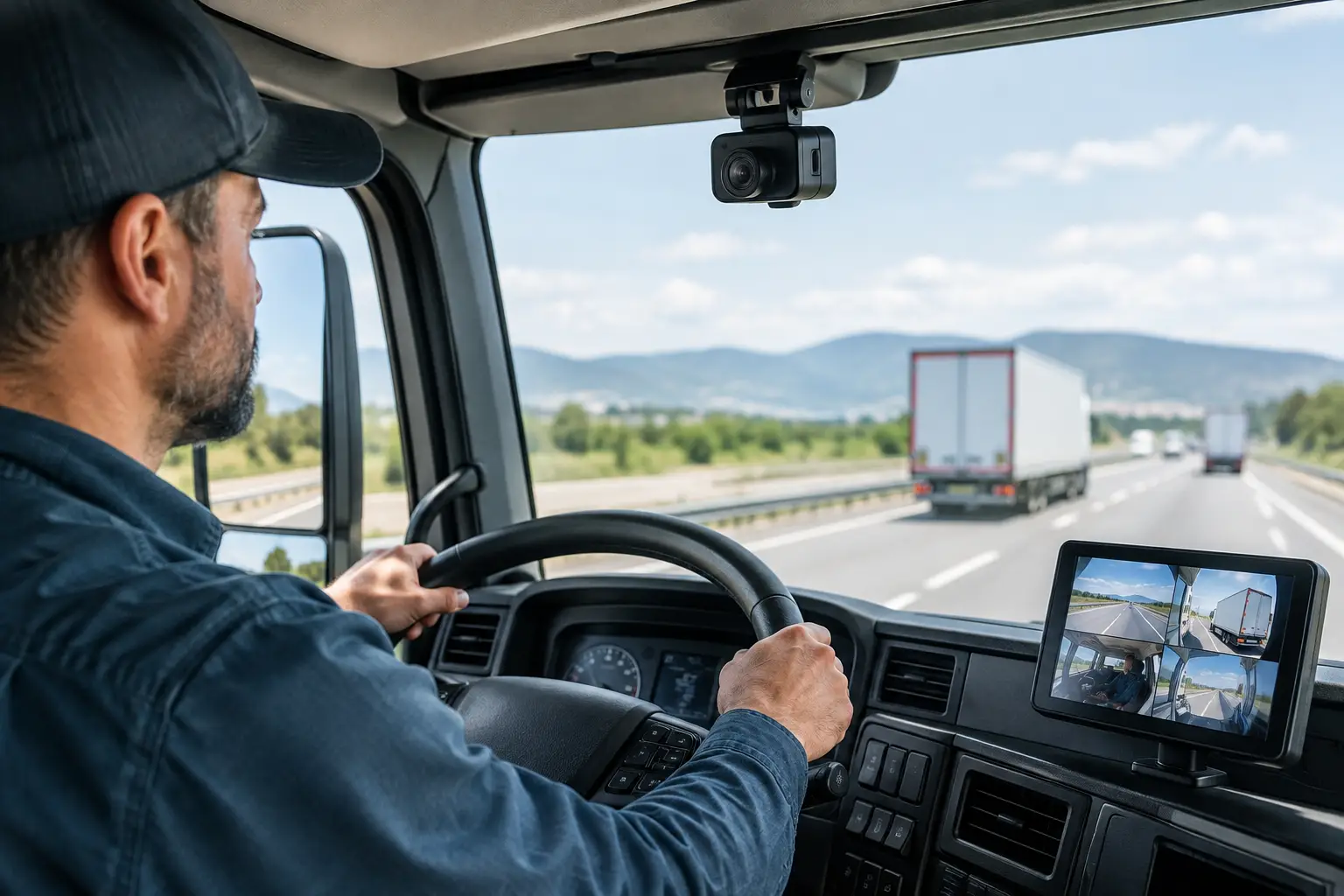
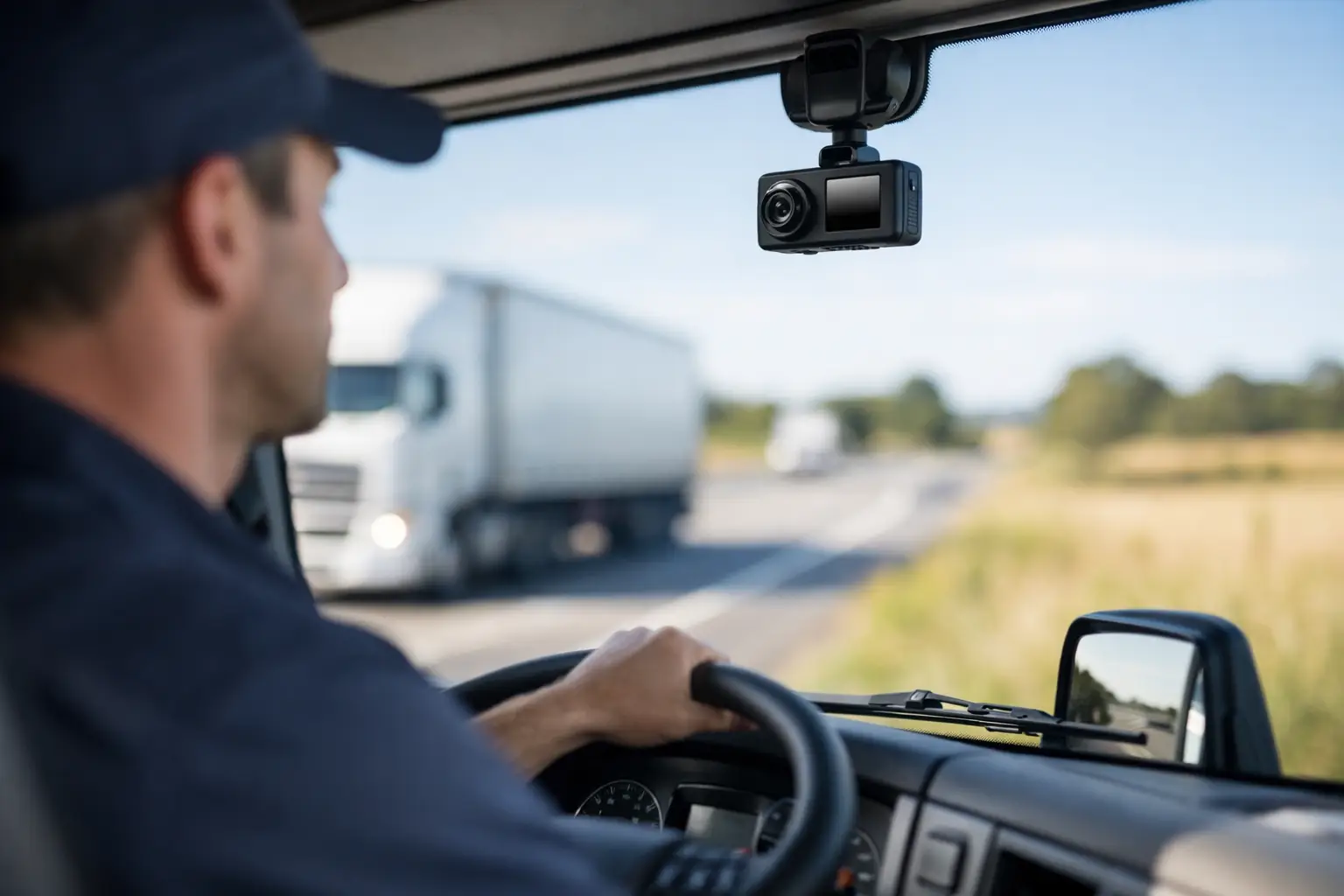
A serious fatigue event, reversing incident or disputed crash can quickly prompt the question: when are driver cameras required? For most Australian fleet operators, the direct answer is that there is no single national rule requiring every vehicle to carry a driver-facing camera. The practical answer is more involved. Your obligations may arise from the safety risks in your operation, a customer contract, an insurer, a regulator direction or a specific state-based transport scheme.
For heavy vehicle operators, the decision should not be reduced to a simple compliance tick. A correctly deployed camera system can provide an early warning of distraction, fatigue, seatbelt non-use and mobile handling. It can also give managers evidence to investigate events fairly and improve controls before a pattern becomes a serious incident.
When are driver cameras required by law?
Australia does not have a blanket Heavy Vehicle National Law requirement that every truck, ute or plant vehicle must have an inward-facing driver camera. NHVR requirements around fatigue, vehicle standards, work diaries, mass and maintenance do not create a universal driver-camera mandate.
That does not mean cameras are irrelevant to compliance. Under the Heavy Vehicle National Law, parties in the Chain of Responsibility must take reasonable steps to prevent breaches relating to fatigue, speed, mass, loading and vehicle standards. Separately, work health and safety duties require a person conducting a business or undertaking to eliminate or minimise risks so far as is reasonably practicable.
Where an operator has identified a foreseeable risk - for example, fatigue on long regional runs, repeated mobile events, high-consequence reversing work or regular interaction with vulnerable road users - a camera may be a reasonable control. Whether it is required depends on the circumstances and on what other controls are available, effective and properly managed.
A regulator may also impose specific conditions following an investigation, improvement notice, enforceable undertaking or accreditation matter. In those cases, camera technology can become a documented requirement for that operator or operation, even though it is not required across the entire industry.
Sector and contract requirements can change the position
Driver cameras are often required commercially rather than by a general road rule. Principal contractors, government buyers, mining sites, infrastructure projects and high-risk freight customers may specify camera coverage as part of site access, prequalification or tender conditions. The requirement may apply to all fleet vehicles, only heavy vehicles, or vehicles performing certain work.
Insurers can also influence the decision. Some policies, risk programs or renewal conditions may require video evidence systems, while others may offer better terms where fleets use verified safety technology. Read the wording carefully. A discount for cameras is not the same as a mandatory requirement, and a mandate may specify features such as forward-facing footage, event recording, retention periods or driver monitoring alerts.
Passenger transport, rideshare, taxi, school bus and government fleet operations can be subject to additional state, territory or contractual rules. These requirements vary by jurisdiction and vehicle use. Before fitting equipment to meet a perceived mandate, confirm the rule that applies to the exact operation, not simply another fleet’s policy.
Driver cameras and workplace privacy obligations
If a business installs driver-facing cameras, privacy and workplace surveillance must be addressed before the first vehicle goes live. Footage of a driver is personal information in many operating contexts, particularly when it is linked to a name, time, location, behaviour score or disciplinary action.
The Privacy Act may apply to organisations with annual turnover above the relevant threshold, as well as some smaller businesses depending on their activities. State and territory surveillance and workplace laws can impose separate obligations. In New South Wales, for example, workplace surveillance is subject to specific notice and signage requirements. Covert monitoring is tightly restricted.
A practical fleet camera policy should clearly state what the system records, whether audio is enabled, why monitoring occurs, who can review footage, when alerts are escalated, how long data is retained and when it may be disclosed. It should also explain whether camera events will be used for coaching, incident investigation, performance management or disciplinary processes.
Consultation matters. Drivers should not learn about inward-facing cameras after installation through an app notification or a manager’s mobile call. Give written notice, provide training and allow genuine questions about how the system works. This supports lawful deployment, but it also improves adoption and helps avoid a perception that the system exists only to catch people out.
Decide whether cameras are a reasonable safety control
The strongest case for driver cameras is usually risk-based. Start with the work being performed, the consequences of failure and the evidence available from your fleet data. A metro courier fleet with short, low-speed runs may need a different solution from a B-double operation working overnight between depots, or a concrete fleet operating around busy construction sites.
Look at fatigue-related incidents, harsh braking, speeding, following distance, reversing claims, mobile use allegations, near misses, workers compensation events and customer complaints. Telematics can identify the vehicle behaviour. Video can add the context needed to understand why it occurred.
That context must be used proportionately. A forward-facing camera may be enough for some claims and road-risk investigations. An AI driver-facing camera may be justified where distraction and fatigue are material risks, provided the alert process is defined and managers can respond promptly. Installing a system that generates hundreds of alerts without a review workflow can create noise rather than safety improvement.
Consider these operational questions before procurement:
- Which vehicles, routes and tasks have the highest exposure to fatigue, distraction or third-party claims?
- What event types should trigger recording or an immediate alert?
- Who reviews footage, and what response time is realistic outside business hours?
- How will coaching be separated from formal disciplinary investigation?
- What retention, access and cyber security controls protect video data?
The answers should be documented in the risk assessment, camera policy and operating procedure. This is particularly important where the business needs to demonstrate that it selected controls systematically rather than reacting after an incident.
Avoid treating camera footage as the whole answer
Cameras are valuable evidence and can be a powerful behavioural safety tool, but they do not replace fatigue planning, fit-for-work processes, scheduling controls, vehicle maintenance, driver training or supervisor accountability. An inward-facing alert about drowsiness is useful only if the driver has a safe option to stop, report fatigue and manage the delay without commercial pressure.
The same principle applies to distraction. If drivers are expected to communicate through multiple mobile applications while moving, a camera will reveal the symptom, not fix the system that created it. Good fleet management combines policy, scheduling, training, telematics, camera evidence and clear intervention rules.
Integration also affects outcomes. Camera events should sit alongside vehicle location, speed, route history, driver identification and relevant compliance information. That gives supervisors one record of the event rather than disconnected portals and manual video requests. For complex fleets, an end-to-end platform reduces the risk that critical footage, driver data and follow-up actions are managed by different teams with no common audit trail.
A practical approach for Australian fleet operators
First, identify whether cameras are expressly required by a contract, insurer, regulator, customer site rule or vehicle-specific scheme. Keep the relevant wording with your compliance documentation. Second, complete a documented risk assessment to determine where forward-facing or driver-facing coverage is reasonably practicable and proportionate.
Then establish the privacy, consultation and data-governance settings before installation. Configure alerts around the behaviours that matter to your operation, set escalation responsibilities and train supervisors to review events consistently. A system should support fair coaching and defensible investigations, not encourage ad hoc monitoring.
For fleets operating across transport, waste, construction, concrete or government services, the right question is rarely whether every vehicle needs the same camera. It is whether each vehicle’s risk profile, operating environment and contractual obligations justify the control. When camera deployment is tied to that evidence, it becomes easier to protect drivers, defend claims and demonstrate that safety decisions are being managed with care.